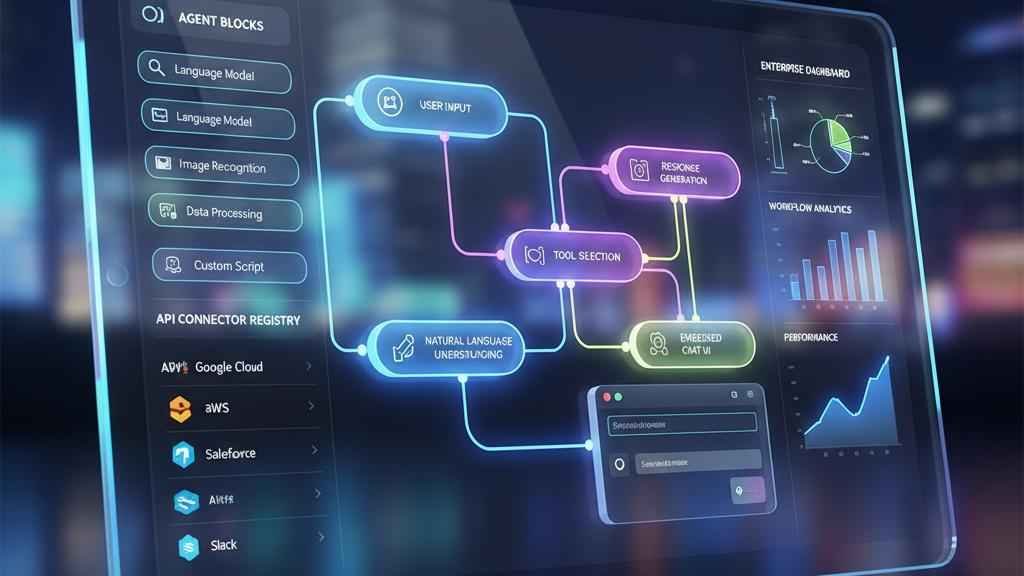
Businesses no longer need large development teams to explore artificial intelligence. Modern AI platforms allow companies to create assistants, automate repetitive tasks, connect business applications, and manage workflows using visual interfaces and natural-language instructions.
However, choosing the right platform is not always straightforward. Some tools focus on simple automation, others specialize in creating autonomous agents, and some provide complete AI infrastructure for business operations.
This is where the no code ai agent builder zanus topic becomes interesting. Zanus AI promotes a different approach to business automation by combining private AI infrastructure, software modules, AI assistants, and workflow capabilities.
But is Zanus AI a conventional no-code agent builder, and what should businesses understand before considering it? This guide examines its capabilities, practical applications, advantages, limitations, and alternatives to help you make an informed decision.
What Is a No-Code AI Agent Builder?
A no-code AI agent builder is a software platform that allows users to create, configure, and deploy AI agents without writing traditional programming code.
Instead of manually developing integrations and application logic, users configure an agent through visual interfaces, natural-language instructions, prebuilt integrations, and workflow components.
An AI agent can do more than generate responses. Depending on its configuration and permissions, it can interact with connected applications, retrieve information, process requests, and perform specific actions.
For example, a business could create an assistant that:
- Reads incoming customer messages.
- Identifies the customer’s requirements.
- Searches an internal knowledge base.
- Retrieves relevant customer information.
- Prepares a response.
- Sends the request to a human employee when necessary.
A conventional chatbot mainly responds to questions, whereas an AI agent can take additional actions through connected tools.
How Does a No-Code AI Agent Builder Work?
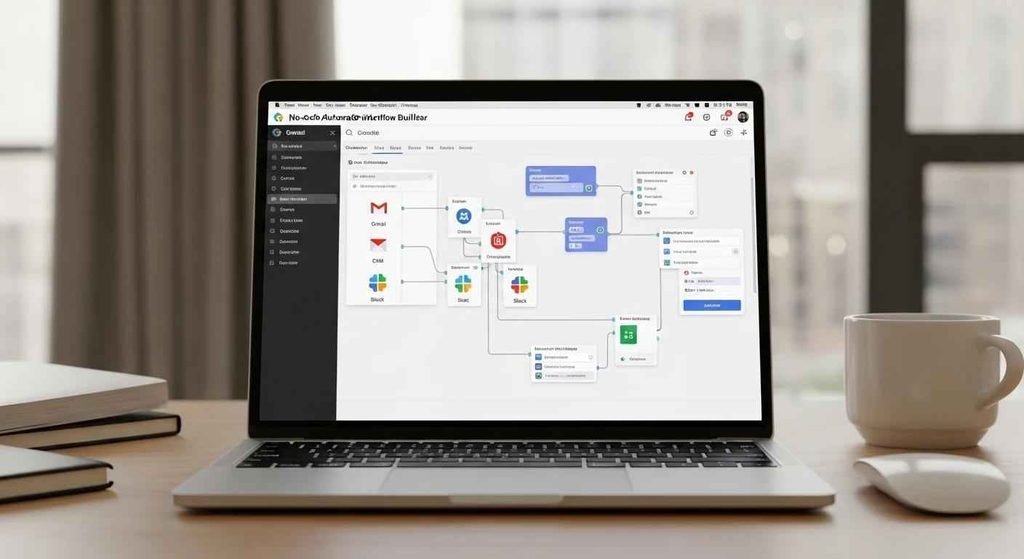
Most platforms use several components to create an operational agent.
| Component | Purpose |
| AI model | Understands instructions and processes information |
| Instructions | Define the agent’s responsibilities and boundaries. |
| Knowledge sources | Provide relevant business information. |
| Integrations | Connect the agent with external applications. |
| Workflow logic | Controls the sequence of actions |
| Permissions | Determine what the agent can access or change. |
| Monitoring | Helps identify errors and evaluate performance |
The process generally starts with defining a task. Users then connect relevant information sources, configure the agent’s instructions, select available actions, and test its behavior.
Modern enterprise tools also support visual workflow configuration and human approval steps.
For example, Zapier Agents allows users to describe an agent’s tasks, connect the required apps, configure triggers and actions, and publish the agent without building the entire system from scratch.
Google’s official Workflow Builder documentation describes creating agents through natural-language prompts or an interactive visual editor, connecting data sources, testing workflows, and scheduling executions.
What Is Zanus AI and How Does It Work?

Zanus AI is a business-focused artificial intelligence platform that emphasizes private AI infrastructure and integrated business software.
Unlike platforms primarily designed around creating individual agents through visual canvases, Zanus AI promotes a broader solution combining hardware, an AI operating system, and industry-specific software.
According to its official website, the offering includes three main components:
- AI hardware: Custom-engineered servers with integrated enterprise GPUs.
- Zanus AI OS: An operating system containing business applications and AI capabilities.
- Industry-specific software: Software packages configured around particular business requirements.
The company advertises more than 15 integrated business modules, including AI chat, document management, scheduling, marketing, web chat, automation, and user governance.
Zanus AI
This distinction matters when evaluating the no code ai agent builder zanus concept. Zanus AI is better understood as a broader private AI and business automation offering rather than automatically being treated as a direct replacement for every visual agent-building platform.
Key Features of Zanus AI
1. Private AI infrastructure
Zanus promotes locally hosted AI processing through its dedicated hardware. Its stated approach is designed for organizations that want greater control over where their business information is processed.
2. AI assistants
The platform describes assistants that can work with business documents, knowledge, and operational information.
3. Workflow automation
Business automation is another advertised capability. Organizations can use automated workflows to reduce repetitive administrative tasks and coordinate operational activities.
4. Document management
Businesses often store important information across contracts, reports, policies, and internal documents. AI-powered document capabilities can help employees retrieve and work with that information.
5. Business integrations
Zanus advertises API connectivity and integrations as part of its broader software offering. Businesses should confirm that their specific applications and required workflows are supported before purchasing.
6. Industry-specific software
The company also promotes industry-focused software packages, allowing organizations to configure the platform around their operational requirements.
These features make Zanus relevant to companies investigating private AI systems and business automation. However, specific agent-building controls, available integrations, and deployment capabilities should be confirmed through a product demonstration.
How to Evaluate Zanus AI as a No-Code Agent Solution
Understanding the difference between advertised features and practical capabilities is essential.
A platform may advertise AI automation without providing every feature found in a dedicated agent builder.
When evaluating the no code ai agent builder zanus concept, consider the following requirements.
1. Agent Creation and Configuration
Ask whether users can create new agents independently or whether the vendor must configure them.
Important questions include:
- Can employees define agent instructions themselves?
- Can they create different assistants for different departments?
- Can they configure individual agent responsibilities?
- Can they modify existing workflows without technical assistance?
These questions help establish how much control non-technical users actually receive.
2. Workflow Customization
A useful agent should support more than one isolated action.
For example, a customer support workflow might need to:
- Receive a customer inquiry.
- Identify the relevant issue.
- Retrieve information from a knowledge base.
- Prepare an appropriate response.
- Escalate complicated cases.
Ask whether Zanus supports this complete sequence and which parts require custom configuration.
3. Integration Support
An AI agent becomes more useful when it can communicate with the applications a business already uses.
Check compatibility with:
- CRM systems.
- Email platforms.
- Document management tools.
- Customer support software.
- Internal databases.
- Scheduling applications.
Do not assume that advertising API access means every integration is available as a ready-made connection.
4. Testing and Monitoring
Before deploying an agent, businesses should test it using realistic scenarios.
Check whether the platform provides execution histories, error reporting, permission controls, and ways to evaluate the quality of its responses.
A successful demonstration using one simple example does not prove that an agent will handle every real-world situation correctly.
Practical Business Use Cases for Zanus AI
The potential value of the platform depends on how well its capabilities match a company’s existing operations.
Here are several practical scenarios.
Customer Support Automation
A company could use AI assistants to retrieve product information, answer common questions, and help support employees prepare responses.
More complicated requests should be transferred to human representatives rather than handled without supervision.
Internal Knowledge Management
Employees frequently waste time searching through documents and company policies.
An AI assistant connected to authorized business information could help locate relevant material and summarize internal documentation.
Administrative Workflow Automation
Businesses can investigate automation for repetitive processes such as document preparation, scheduling, task coordination, and internal notifications.
These workflows should have clearly defined permissions and approval requirements.
Marketing and Communication
AI-powered tools can assist with drafting marketing content, organizing information, and preparing customer communications.
Human review remains important before publishing content or sending important business messages.
Industry-Specific Operations
Organizations with specialized requirements may find industry-specific software more useful than a generic AI assistant.
For example, a legal office, healthcare organization, or real estate company may require different document structures, access permissions, and operational workflows.
The actual suitability of Zanus depends on the available software package, configuration, and contractual capabilities.
Zanus AI vs. Traditional No-Code AI Agent Builders
Not every business needs a complete private AI system. Some organizations simply want to automate emails, organize customer inquiries, or connect different applications.
The following comparison explains the difference between these approaches.
| Comparison | Zanus AI | Traditional no-code builders |
| Main focus | Private AI and business software | Agent creation and automation |
| Infrastructure | Promotes dedicated on-premises hardware | Commonly cloud-based |
| Agent configuration | Confirm available controls with vendor. | Often visual or prompt-based |
| Business modules | Integrated operating system | Depends on the individual platform. |
| Integrations | Advertises API connectivity | Often provides app connectors |
| Data control | Promotes local processing | Depends on provider and deployment |
| Best suited for | Businesses exploring private AI infrastructure | Teams building specific automations |
Platforms such as Zapier Agents, Make, n8n, and Relevance AI address different automation requirements. Their actual capabilities, technical complexity, and pricing models vary.
A small business that needs to automate a few applications might find a conventional no-code platform more practical.
An organization with strict data-location requirements and broader operational needs might investigate Zanus AI instead.
Neither approach is automatically better for every business.
Benefits of Using a No-Code AI Agent Builder Zanus Approach
There are several potential advantages to exploring no-code AI and integrated private infrastructure.
Reduced Dependence on Programming
No-code interfaces can make AI automation accessible to employees who do not have software development experience.
However, advanced integrations and complex business requirements may still require technical support.
Better Control Over Business Information
Zanus emphasizes locally hosted infrastructure, which may appeal to organizations handling confidential information.
Businesses must still verify encryption, access controls, backups, logging, and network security. On-premises deployment alone does not guarantee complete security.
More Connected Business Operations
An integrated platform can reduce the need to manage multiple disconnected systems.
For example, employees may benefit from accessing documents, assistants, scheduling, and automation within a common environment.
Potentially Lower Development Complexity
Preconfigured software modules can reduce the amount of custom development required for common business processes.
The actual savings depend on setup requirements, licensing, infrastructure costs, maintenance, and employee training.
Limitations and Things to Check Before Buying
No AI platform should be selected based entirely on its marketing claims.
Before investing in the no code ai agent builder zanus approach, consider these important limitations.
Hardware transparency: Ask for the exact GPU model, available memory, processor specifications, storage, and upgrade options.
Pricing: Zanus advertises its private server packages through quotation-based pricing. Request a complete written quotation covering hardware, software, installation, support, and maintenance.
Agent customization: Confirm whether employees can independently create and modify agents or whether the vendor handles configuration.
Integration compatibility: Request a demonstration using your actual applications and business data.
Security controls: Check encryption, role-based permissions, audit logs, backup policies, and update procedures.
Vendor support: Establish what technical assistance, maintenance, warranties, and software updates are included.
Performance: Test realistic workloads rather than relying exclusively on demonstration results.
These checks help prevent an expensive purchasing decision based on features that may not match your actual requirements.
How to Choose the Right No-Code AI Agent Builder
Selecting a platform becomes easier when you start with the problem instead of the product.
Follow these steps before making a decision.
- Identify the task: Decide which repetitive business activity you want to automate.
- Define the expected result: Establish what a successful agent should accomplish.
- Check integrations: Confirm that your existing applications can connect.
- Review permissions: Determine which actions require human approval.
- Test with realistic data: Evaluate the system using actual business scenarios.
- Calculate total cost: Include setup, subscriptions, hardware, maintenance, and training.
- Review scalability: Check whether the platform can support additional employees and workflows.
For businesses comparing private AI infrastructure with cloud-based automation, request demonstrations of both approaches before committing.
FAQs
Is Zanus AI a no-code AI agent builder?
Zanus AI promotes AI assistants, automation, and custom AI agents as part of its wider business AI ecosystem. However, its broader private AI operating system should not automatically be considered identical to a conventional visual agent builder. Confirm the available creation and customization interface with the vendor.
Can I build AI agents without programming?
Yes. Many modern platforms allow users to configure agents using natural-language instructions, visual workflows, and prebuilt integrations. Complex requirements may still need technical assistance.
Does Zanus AI support private AI deployment?
Yes. Zanus advertises dedicated on-premises AI servers designed to run AI models locally. Confirm the specific hardware, deployment architecture, and security arrangements before purchasing.
Is a no-code AI agent builder suitable for small businesses?
Yes. Small businesses can use no-code platforms for customer support, lead management, document processing, and repetitive administrative tasks. The best option depends on the required integrations, budget, and technical complexity.
What should I check before buying Zanus AI?
Review hardware specifications, total pricing, agent customization options, supported integrations, security controls, maintenance arrangements, and vendor support. A practical demonstration is particularly important before making a purchase.
Conclusion
Choosing the right no-code AI platform requires understanding what you actually want to automate and how much control your business needs.
The no code ai agent builder zanus topic highlights an interesting approach to business AI: combining assistants, workflow automation, industry-specific software, and private infrastructure.
Zanus AI may be worth investigating for organizations interested in integrated business software and locally hosted AI. However, businesses looking for a straightforward visual agent builder should compare its actual configuration capabilities with dedicated alternatives.
Before making a decision, request a demonstration, verify the specifications, and test the workflows that matter most to your organization. The right platform is the one that solves your operational problems reliably without introducing unnecessary complexity.