
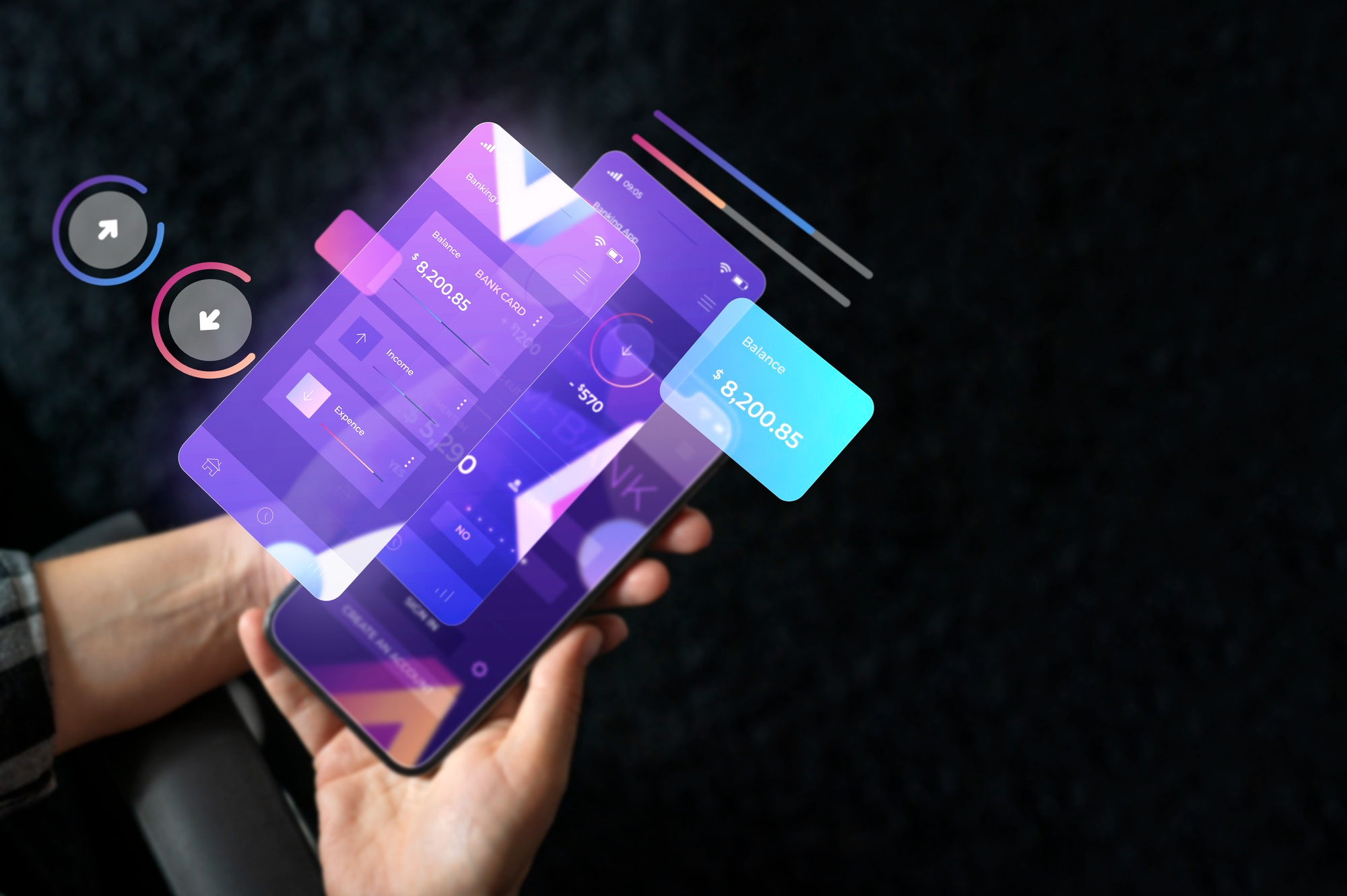
It all started when Steve Jobs revealed the first iPhone in 2007. No one believed the mere slab of glass could dramatically reset lifestyles. And yet we have been using it for everything – work, dating, eating, traveling, and more! The biggest engine of the revolution has been iOS App Development – at least, until today.
So, the world of apps is very important economically and globally and has produced millionaires overnight from simply bedroom coders to startups with billion dollars valuation.
Technology, however, doesn’t just move forward – it keeps accelerating. The tricks and the tools that helped mainstream the hit apps of 2024 are showing some cracks already. By 2026, it’ll be almost like a whole new world.
The situation today could hardly be worse for the development and business people who still base their methods and strategies on what they have at hand.
You simply can’t afford to be left behind while competition is already switching from manual to AI-assisted coding, from 2D to spatial interfaces, and from simple to quantum-resistant encryption.
It’s a long run from the first days of programming in Objective-C to Swift’s trait for smoothness. At this point, we’re on the brink of the next major change. This guide is meant to be your roadmap to 2026 iOS App Development. We will focus on breaking down essential tools, estimating financial outlays, and going over the skills necessary for facing the challenge.
iOS Development: State Transition from 2024 to 2026
Yet if you want to know where we are headed, it is good to be aware of the fundamental changes happening at our feet right now.
The next step to 2026 will involve not a single dramatic technological breakthrough but the simultaneous development of several different technologies that are directly influencing the workings of iOS App Development.
SwiftUI RISE
For a long time, UIKit was the dependable workhorse of the Apple landscape. It was sturdy, detailed, and… also very, very verbose. And then along came SwiftUI.
As of 2024, SwiftUI was widely acknowledged, while two years later it will have practically taken over the whole front-end development world of iOS. We are no longer limited to relatively simple UI layout solutions.
SwiftUI has become mature enough not only to implement complex navigation flows but also to be deeply integrated with the system without having to use the UIKit bridges that were necessary earlier.
The 2026 newcomers will probably consider starting with UIKit as being akin to writing a web application in raw HTML without the help of CSS. The declarative aspect of SwiftUI significantly speeds up iOS development, giving developers the ability to create beautiful, smooth, and highly responsive interfaces with dramatically less code.
Privacy as a core feature
Apple has consistently emphasized privacy in its marketing strategy and, on one hand, this has brought troubles to advertisers, while, on the other hand, it has gained the faith of the users. We will get to see that by the time of 2026, no one will even remember that there was a time when “Privacy by Design” was just a fancy phrase, since it will be more like a gatekeeper.
Furthermore, the future of iOS Development isn’t going to allow permissions to be considered only at the moment of user interaction or as an afterthought.
Not only will the hardware security features become even more sophisticated, but the developers will also have to learn how to build apps that are less and less reliant on server data.
The days are long gone when you could ask for the user’s pictures or contacts and still get away with it; nowadays, the reason has to be made clear and convincing, and the user must come first.
5G will be the standard for the next generation of apps performance
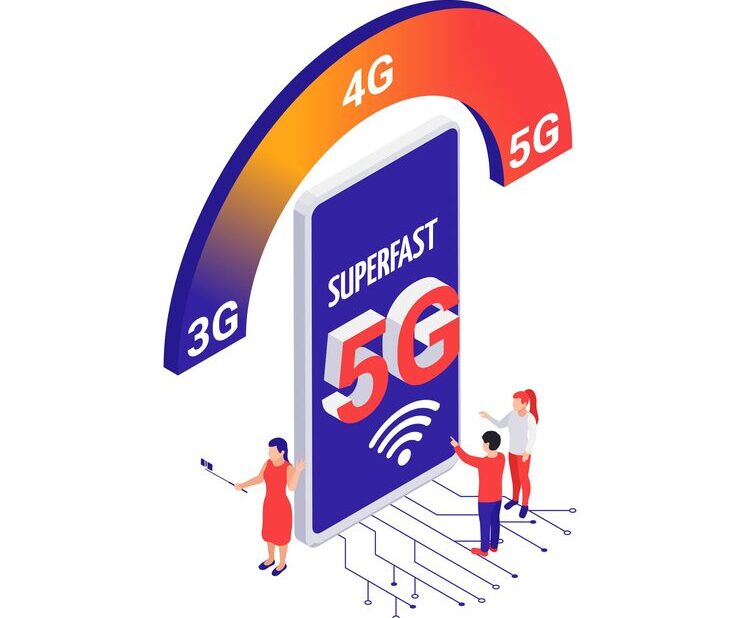
Do you still remember how we had to drastically reduce the image sizes to make sure there was no slow loading on 4G networks? Even though optimizing is always a good thing to do, with the increasing penetration of 5G (and the initial trials of 6G) the scenario has completely changed.
With the help of high-bandwidth wireless connections, a greater volume, and a higher degree of complexity in the contents can coexist with the absence of lag in the execution.
The net result is that massive content such as rich media, 4K streaming, or real-time collaborative features, can be run locally on mobile devices. In this way, iOS development takes advantage of the pipeline for pushing the heaviest computations to the edge cloud while maintaining a smooth user experience, which makes the application seem more powerful than the physical device on which it is operated.
Mobile App Trends: Hyper-Personalization
One of 2026’s dominant mobile app trends will be hyper-personalization. It’s quite evident that static UIs are not acceptable anymore for users. Thus, it can be said that users expect apps to change according to their behavior, time of day, and place.
In 2026, if you use a commerce app, it won’t simply display “recommended products” to you. The app will actually customize its whole navigation strategy according to the way you shop. For instance, if you usually look at the products in the morning but buy at night, the UI should be reflective of that. Such dynamic adaptation is on its way to becoming a standard in 2026 iOS development.
The toolkit of 2026: What you must-have
In an environment of manual work, developers dread toiling in such kind of work. These (manual works) are already getting automated gradually, and hence the developers are left with only creative and high-level engineering.
AI-powered coding assistants
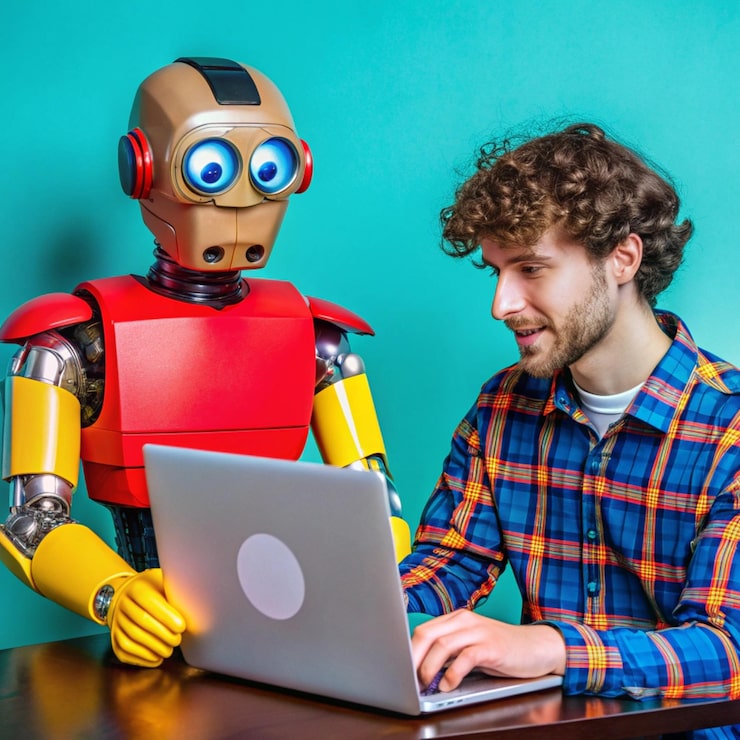
Simple autocomplete is not what this is about. By 2026, AI assistants will be fully integrated into Xcode and will be writing boilerplate modules just like that.
You chat with the AI about the data models and it comes up with the Core Data stack, the API networking layer, and unit tests in a couple of seconds. So iOS developers will shift to directing the AI towards the right business logic since writing code is less considered as a workload anymore. The AI tools not only can detect bugs and offer fixes in real-time but they can also give you the architectural refactorings to prevent workers from accumulating the technical debt after you have coded the software.
No-code/Low-code Integration
Some people worried that the developers will be replaced by no-code platforms, but instead, these tools have turned out to be very useful for developers. Looking at the progress so far, expert developers in 2026 will have no problem using low-code for creating prototypes.
In the absence of any single line of swift, the developers are able in low-code environments to create a working prototype. Once it is validated, through native coding performance-critical parts are rewritten or the logic is exported. It connects the dots between design and production.
Cloud-based IDEs
Nowadays, we are blessed with an advantage that we no longer have to rely on a powerful laptop to design basic apps . Through Cloud Integrated Development Environments (IDEs), developers will continue to work together to produce flawless outputs. Just as Google Docs has transformed collaboration in writing projects, it is quite similar to how cloud IDEs help programmers to edit the same codebase simultaneously from different locations.
Indeed, this development gradually eliminates the requirement for a powerful machine and helps the new member to easily get acclimated to the team. It is possible that you can spin off a cloud-based dev environment that matches the production perfectly and thus, the bug “it works on my machine” is completely eliminated.
Immersive Tech Kits
The unveiling of Apple Vision Pro and its subsequent versions has allowed the spatial computing move from being niche and thus, trendy to being mainstream. Therefore, iOS Development frequently gets mixed up with visionOS.
Developers in 2026 have to be able to use RealityKit and ARKit. Even regular 2D apps should have “immersive moments” ; these are like product visualizations jumping right out of the screen or map projections on the floor. Knowledge of 3D coordinate systems is quickly becoming a standard requirement for the toolkit.
Automated Testing Suites
Quality Assurance (QA) can no longer be a bottleneck. In 2026, automated testing suites are far more intelligent. They not only perform script runs but also simulate AI-driven “user personas” who engage with the app unexpectedly, trying to break it.
With the help of these sophisticated instruments, iOS Development cycles can continue to be agile. Developers can go ahead and publish their codes before the weekend, knowing that the automated suite has covered thousands of user scenarios for regressions.
Core Competencies of a 2026 iOS Developer
Changing tools’ nature may be , but core skills , such quite reality, .
Here is the dope on the must-have skills a top-notch developer will flaunt in 2026.
Swift Programming Mastery
These days a developer who can hardly write a line of code is provided with a myriad of AI coding assistants who, at the very least, can be their pair programmer. However,Swift Programming knowledge is still essential for next-level engineers.
It is a skill set that enables reviewing of AI-generated source codes, optimizing the algorithms for the CPU intensive tasks, and resolving the issues arising out of concurrent programming. The ones who are good at memory management and protocol-oriented programming stand out in the crowd.
Machine Learning Fluency
Data scientists are not a requirement for you on your team. However, you will need to be proficient in the translation of their raw work into practical applications. Machine learning for iOS development has been significantly characterized by on-device ML.
One must understand how to leverage Core ML models to accomplish different tasks such as image recognition, natural language processing, and predictive text while also managing power consumption. The knowledge of which model to use and how to feed it is crucial.
Cybersecurity Awareness
By the year 2026, a developer will not be able to remain content with only Equipping with knowledge of HTTPS if they want to see their apps gain popularity as more and more of such apps will inevitably start to deal with sensitive, financial, and healthcare data.
Among such vital skills are knowledge of advanced encryption, how to make use of the secure enclave, and the management of tokens, etc. iOS Development revolves around a security-first concept, the untapped vulnerabilities being identified before they become a breach and not after the fact.
Spatial Computing Logic
Transitioning from two-dimensional screens to three-dimensional spaces, especially in the era of the increasing popularity of extended reality devices, requires a new mode of cognition.
Spatial computing logic has something to do with the idea of users interacting with digital entities located in a physical room.
Additionally, there is the issue of visual ergonomics and 3D accessibility that developers have to be aware of. Developers need to grasp gaze controls, hand gestures, and also know how to design a UI that is not exhausting to use.
DevOps & Cloud Literacy
Applications do not just “live” but also “survive” in a pipeline. The use of Continuous Integration and Continuous Deployment (CI/CD) enables developers to systematize their delivery process.
Moreover, a good number of the modern applications that you see nowadays only serve as the front ends for the respective powerful cloud backends. Hence, a developer who understands serverless functions, database structures, and API latency will be able to enhance the quality of the front-end user experience.
Innovation’s Price Tag: 2026 Cost Factors
If you are an entrepreneur or founder of a startup, you are probably wondering: What’s the price tag here? The budgets of iOS app development in 2026 have, in fact, changed.
Of course, partly some things have become cheaper due to automation but nevertheless, certain things are throwing their weight around.
Talent Costs: The Specialist Premium
AI has changed things in a way that has both decreased the floor and increased the ceiling. The entry-level tasks of the junior developer are being sealed off more and more through automation, thus leading to the lowering of entry-level costs. However, the demand for senior architects, who possess the Swift Programming genius and spatial computing skills, is soaring.
Whether it is through in-house hiring or outsourcing, a specialist talent premium is something that you should always be ready to pay. The efficiencies of a small, three-person, senior-engineering-team equipped with AI tools are such that the work of ten 2020 developers can now be done by them.
Infrastructure & Licensing
The time when you would buy a license only once is long gone. The iOS App Development stack has nowadays turned
- Cloud hosting: as apps get more dependent on 5G and edge computing, AWS or Azure bills will most likely increase significantly.
- Apple Developer Program: standard fees continue to hold but the enterprise tier for the large distribution networks remains a factor of cost.
- Tooling: the benefits of AI coding assistants, automated testing platforms, and design suites materialize in price. What you pay for is the speed as well as the reliability which in this case means the value of the usage experience.
Marketing & ASO: The Hidden Budget Eater
It makes no difference how competent your app is if no one gets to see it. The App Store has never been more crowded. A good part of the iOS development budget selected/worked out must be used for marketing, a task that is aimed at customers/user acquisition.
In 2026, ASO will be at a highly refined level. This includes screenshot A/B testing, video previews localization for different regions, and even paying for search ads to acquire initial traction.
Long-term Maintenance
Your app is a living organism, hence, just like you, it must continue to evolve through different stages.
Mobile App Trends change and so does iOS. Each September, Apple unveils a new iOS version, and it is a must that your app should also be ready for it.
Setting aside a budget for maintenance also means making your app compatible with new screen sizes, updating deprecated code, and redesigning it if you want it to keep up with the latest trend in mobile UI/UX. On the other hand, a backward look at this will show “bit rot,” where the app gradually becomes unusable.
IOS App Development: Beyond 2026
2026 is not that far away but what is the future WE are lapping behind it? The forward-looking trajectory of iOS development clearly points towards the cutting edge of technology today.
Quantum Computing
The idea is so far-fetched from reality that it even sounds like a story from the science fiction genre. However, the effect that quantum computing can have on mobile security is simply a fact. Once quantum computers gain the capability of breaking the currently available standard of encryption, iOS Development will be forced to employ post-quantum cryptography algorithms in order to safeguard user data.
The Post-App Era
The concept of application “unbundling” is currently gaining popularity among the group of scholars. The scenario will be as such that instead of launching a travel app to book a flight, your interaction with an AI assistant at the operating system level will be communicating with the airline’s API directly.
It may for future iOS Development seem as building less visual interfaces and more services and “skills” that Siri or other agents can use. The ultimate goal is the “invisible app”—one that solves the user’s problem without them ever having to tap the icon.
Continuous Learning
Change remains the constant factor. The frameworks we are using today may no longer be around tomorrow. The ability to adapt will be the most coveted asset for anyone involved in iOS Development.
Developers surviving beyond 2026 might not be those who memorized the documentation but those who learned how to learn.
Navigating the Future
The era of business and communication apps thrown together with marketing and social applications is somewhat coming to an end. The revolution is around the corner where gaming apps will match up for their share. The digital marketing strategy, which is pinpointed in segmenting and targeting, is alive; however, the use of metaverse is getting to be more and more predominant.
In the same way that AI-assisted coding is becoming a norm, Swift Programming dominance is not just the new trend; it has become the basic requirement for entry. For businesses, the financial reality is moving away from paying for coding hours towards paying for architectural skills and market positioning. The price is great, and so is the reward for those who can execute perfectly.
When planning for 2026, you have to understand that tools are merely developer-faced entities you can use to solve different problems. It doesn’t matter what the technology is – spatial computing or hyper-personalized interfaces; the goal is always to solve people’s problems through tech.
The future of iOS App Development is bright, fast, and demanding. If you want to be part of it, the time to start upskilling is now. Don’t wait for the future to come—create it.
FAQs
1. Why is iOS app development changing so fast toward 2026?
Because AI-assisted coding, SwiftUI maturity, privacy rules, and new interfaces are rapidly reshaping how apps are built.
2. Why will SwiftUI dominate iOS development by 2026?
SwiftUI allows faster, cleaner, and more responsive UI development with significantly less code than UIKit.
3. How will AI tools impact iOS developers in 2026?
AI will automate boilerplate code, testing, and debugging, letting developers focus on architecture and business logic.
4. What new skills will iOS developers need by 2026?
Strong Swift knowledge, machine learning basics, cybersecurity awareness, spatial computing, and cloud/DevOps skills.
5. Why will iOS app development cost structures change in 2026?
Automation lowers basic costs, but demand for senior specialists, cloud infrastructure, AI tools, and marketing increases budgets.
Conclusion:
iOS app development is entering a new era where AI, SwiftUI, privacy-first design, and immersive technologies will define success. By 2026, developers and businesses that adapt early—by upgrading skills, tools, and strategies—will stay competitive, while those relying on outdated methods risk falling behind. The future of iOS development belongs to continuous learners and innovators.