

Tech giants envision future beyond smartphones, and this shift is already changing how we live, work, and interact with technology. For years, I considered my smartphone the most important object I owned—it was my planner, my navigator, my entertainment, my work inbox, and my digital wallet. If you had asked me in 2016 what could replace the smartphone, I would have laughed. Replace this device? Impossible.
But over the pandemic years, I started noticing something different. My eyes felt strained, I caught myself checking notifications unconsciously, and even social dinners became scrolling sessions. That’s when it hit me: maybe tech giants envision future beyond smartphones in ways we haven’t fully realized.
I quickly realized I wasn’t alone. Major technology leaders—Apple, Google, Meta, Microsoft, and OpenAI—are investing billions in a future where smartphones no longer dominate. In this article, I’ll share my journey, the emerging technologies replacing phones, and a step-by-step guide for anyone wanting to understand how tech giants envision future beyond smartphones shaping the next decade.
Why Tech Giants Envision Future Beyond Smartphones
The more I paid attention to my daily phone usage, the more I realized how unnatural it actually is. We weren’t built to stare at glowing screens all day. Yet smartphones force us to.
Here’s what made me rethink everything:
1. Phones are no longer growing—they’re stagnating
I used to get excited for every new iPhone announcement. These days? A new camera. A faster chip. A slightly improved battery.
Useful, sure—revolutionary, no.
The smartphone has become what the laptop became years ago: mature, predictable, fully optimized.
2. Screen fatigue became real for me
I started waking up with dry eyes. My productivity dipped. My attention span shrank. And I’m someone who loves tech. Yet I found myself craving screen-free moments.
This is when I started experimenting with wearables, which eventually replaced half the tasks I used to do on my phone.
3. Artificial Intelligence surpassed the smartphone era
When I saw the first real demos of multimodal AI systems that understand vision, speech, context, and movement, it clicked for me:
Why are we still limiting this intelligence to a tiny rectangle?
AI wants to move into our world, not stay behind glass.
4. The way we interact with technology is evolving
We don’t want button-pressing anymore. We want natural interfaces:
- Voice
- Eye tracking
- Gestures
- Context
- Sensors
- Environmental intelligence
This realization pushed me to explore next-generation devices—and once I did, the smartphone immediately felt outdated.
Tech Giants Envision Future Beyond Smartphones: What’s Next
I’ve tested or researched nearly every emerging device category that big tech companies are developing. Some experiments were awkward. Others felt magical.
But all of them point to one thing:
The smartphone is becoming just another device—not the device.
1. Augmented Reality Glasses — The Future I’ve Already Tasted
Full transparency: I used to think augmented reality was gimmicky. But then I got my hands on the Meta Ray-Ban Smart Glasses.
I’ll never forget the first time I used them on a walk.
Instead of pulling out my phone for navigation, the audio instructions gently whispered into my ear. I captured moments hands-free. I listened to messages without staring at anything. My mind was free in a way that smartphones never allowed.
This was the moment I realized:
AR glasses aren’t the future—they’re the transition.
Devices like Apple Vision Pro and future Apple AR glasses will make this mainstream.
Why AR glasses will win:
- Hands-free interaction
- Real-time visual overlays
- AI-powered contextual understanding
- Natural navigation and translation
- No constant screen dependency
This is the first time technology felt like it fit around my life, instead of dragging my attention away from it.
2. Smart Contact Lenses — Tiny, Private, Astonishing
When I first learned about Mojo Vision’s smart contact lenses, I almost didn’t believe it. AR… on your eye? Like a sci-fi movie?
After attending a tech conference demo, I left convinced these lenses might become the most intimate personal devices we’ve ever owned.
Imagine discreet overlays showing:
- Health data
- Navigation
- Messages
- Object recognition
- Real-time translations
No one sees it but you.
This level of privacy and immediacy goes far beyond anything a smartphone can offer.
3. Brain–Computer Interfaces (BCIs) — The Wildest Frontier
I’ve been following Neuralink since its earliest public demonstrations. The first time I watched a paralyzed individual control a computer with their mind, something inside me shifted.
This isn’t just evolution—it’s revolution.
BCIs have the potential to eventually:
- Replace touchscreens entirely
- Let us type with our thoughts
- Navigate digital interfaces mentally
- Enhance memory and processing
Right now, they’re in medical stages, but every major tech company has BCI research underway.
It’s early. It’s experimental.
But it’s coming.
4. Ambient Computing — When Your Environment Becomes Your Device
Out of everything I’ve tested or studied, this one feels the most beautiful to me.
Ambient computing transforms your room into an intelligent assistant through IoT, sensors, and AI reasoning.
Imagine this becoming normal:
- Your kitchen displays recipes automatically
- Your home adjusts its lighting based on mood
- Your workspace projects virtual screens
- Your AI hears you without needing to say “Hey Siri”
Companies like Google, Amazon, and OpenAI are moving aggressively toward this.
Soon, you won’t need to pull out your phone for anything.
Your environment will understand you.
How Tech Giants Envision Future Beyond Smartphones: Company Plans
Here’s how I personally see each company shaping the future—based on the devices I’ve tested, the announcements I’ve followed, and the leak cycles I’ve studied.
Meta — Betting Everything on AR Glasses + AI Companions
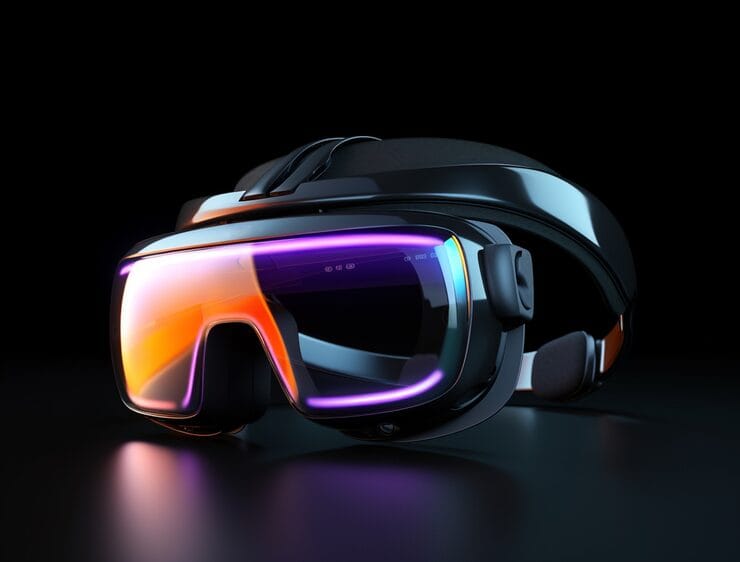
Meta’s Reality Labs is burning billions to make AR glasses mainstream.
The moment I tried the Meta smart glasses with the new AI assistant, I realized how far ahead they are.
Meta’s strategy:
- AI that sees through your glasses
- Always-on context awareness
- Lightweight, fashion-friendly hardware
- Social AR features
They want these glasses to replace phones socially—and honestly, they’re on track.
Apple — Building a Seamless Spatial Ecosystem
Apple is more methodical.
After experiencing the Apple Vision Pro, I can confidently say Apple isn’t experimenting—they’re laying foundations.
Apple’s roadmap (based on my research and industry chatter):
- Vision Pro → early spatial OS
- Lightweight AR glasses → iPhone replacement
- Full ecosystem integration
Their long-term plan is clear:
The iPhone will retire. Spatial computing will take over.
Google — The Open, AI-Driven Future
Google’s vision aligns most closely with my personal expectations.
With Project Astra, I saw something magical: AI that understands the world live, through a camera.
Google’s strengths:
- Android XR
- AI integrated into daily tools
- Multimodal reasoning
- Partnerships with Samsung and Qualcomm
Google wants computing to live inside everything—not inside one device.
Microsoft — Industrial, Practical, and Powerful
Microsoft’s HoloLens opened my eyes to how businesses will adopt AR faster than consumers.
Their approach is less flashy but more foundational:
- Enterprise training
- Remote collaboration
- Mixed reality design tools
- AI-assisted manufacturing
They’re building the backbone of post-smartphone computing for work.
OpenAI — The Future of AI Companionship

No company has changed my workflow more than OpenAI.
With voice-mode AI assistants, Operator, and robotics partnerships, OpenAI’s goal is clear:
Make AI your always-available companion—no apps, no screens, no friction.
This vision aligns perfectly with a world where smartphones fade into the background.
My Step-by-Step Guide to Prepare for the Post-Smartphone Era
These steps are based on what I personally did over the last two years while transitioning away from phone dependency.
Step 1: Start Using Wearables Daily
Try smartwatches, smart rings, or glasses.
These devices replace:
- Notifications
- Fitness tracking
- Messaging
- Voice commands
- Navigation
and drastically reduce screen time.
Step 2: Shift to Voice-Based Computing
Start doing simple tasks using:
- Siri
- Google Assistant
- Alexa
It feels awkward at first, but quickly becomes natural.
Step 3: Purposefully Declutter Your Apps
Move apps off your phone and into the cloud or wearables.
The less you depend on a screen, the easier the transition becomes.
Step 4: Experiment With Early Spatial Devices
Try:
- Meta Ray-Ban Smart Glasses
- Apple Vision Pro
- Meta Quest
This is where the future starts to feel real.
A Personal Moment That Made Me Realize the Future Had Changed
Last fall, I traveled to a city I’d never visited before.
Instead of pulling out my phone, I relied entirely on AR glasses and an AI assistant.
At one point, I looked up at a busy intersection—no idea where to go.
Suddenly, a simple glowing arrow appeared in my lens, guiding me across the street.
I didn’t stop. I didn’t tap a screen. I didn’t break rhythm.
For the first time, I felt technology enhance reality instead of distracting me from it.
That was the day I stopped believing smartphones were the pinnacle of tech.
Why You Can Buy Into This Future With Confidence
I’ll be very honest: I don’t say this lightly.
Here’s why I believe investing in next-gen devices is worth every penny:
1. Big Tech has made irreversible commitments
These companies aren’t experimenting anymore—they’re transitioning.
2. The hardware is maturing rapidly
In just a year, AR glasses went from bulky to stylish.
3. AI is evolving faster than any device cycle
We’re reaching a point where the device matters less than the intelligence behind it.
4. Early adopters gain the biggest advantage
Just like early smartphone owners shaped the mobile era.
5. The quality of daily life truly improves
- Less screen time.
- More presence.
- More intuition.
- More productivity.
FAQs
1. What does “future beyond smartphones” really mean?
It refers to emerging technologies—like AR glasses, smart wearables, spatial computing, and AI assistants—that aim to replace traditional phone screens with more natural, immersive, hands-free digital experiences.
2. Are AR glasses actually capable of replacing smartphones?
Yes, for many tasks. Modern AR glasses already handle navigation, notifications, hands-free recording, AI assistance, and more. As they gain displays, gestures, and apps, they’ll cover most smartphone functions.
3. Is it worth investing early in post-smartphone technology?
Absolutely. Companies like Apple, Meta, Google, and OpenAI are investing billions into spatial and wearable tech. Early adopters gain familiarity, productivity advantages, and long-term benefits within the ecosystem.
4. Will smartphones disappear entirely?
Not immediately. They’ll slowly shift into a secondary or backup device—similar to how laptops didn’t kill desktops, but changed their role. Over the next decade, phones will become less central.
5. What steps should I take to prepare for the post-phone era?
Start by adopting wearables, using voice assistants more often, reducing screen dependency, experimenting with AR devices, and exploring AI tools. These habits make the transition seamless.
Conclusion
Smartphones changed the world. But now, they bThe tech giants envision future beyond smartphones as a world that is Spatial, Intelligent, Ambient, Hands-free, Human-first, and AI-powered. This isn’t just a trend—it’s a fundamental shift in how we live, work, and communicate.
Every choice you make today—trying smart glasses, adopting AI assistants, using wearables, or experimenting with spatial computing—brings you closer to a world where tech giants envision future beyond smartphones shaping the digital landscape. Smartphones will no longer be the centerpiece, but just one device among many.
For anyone looking to stay ahead, understanding how tech giants envision future beyond smartphones is the key to thriving in this new era. The future is already unfolding—and it’s smarter, more natural, and more human than ever.