Technology-driven cleaning services are transforming how we clean offices, hospitals, hotels, schools, and modern homes. AI, IoT, and automation now make cleaning faster, safer, and more consistent, moving beyond traditional physical effort.
Smart sensors detect when areas need attention, AI schedules tasks efficiently, and automation reduces human error—ensuring high-quality results every time.
In this article, you’ll discover:
- What technology-driven cleaning services are
- How AI and IoT enhance real cleaning operations
- What automation can (and cannot) do
- How to select or build a tech-powered cleaning program that delivers measurable results
What Are Technology-Driven Cleaning Services?
Technology-driven cleaning services refer to decorators working professionally together as well as through digital tools for enhanced operation, execution, quality assurance, etc. Planning these services is not only based on checklists and manual supervision but they also utilize connected devices, smart software, and automation for answering practical questions such as:
- Which areas are genuinely the most crowded each day?
- What tasks were completed by whom, when, and where?
- Where standards are dropping lately, is it due to a lack of attention or the absence of resources?
- How can saving chemicals, water, and human labor be realized without compromise on hygiene?
Basically, technology-driven cleaning services take hygiene from a ‘best effort’ to a managed system through which cleaning can be measured and improved over time.
Three Technology Pillars: AI, IoT, and Automation
Today, most technology-driven cleaning services follow the 3 main pillars:
1) AI (Artificial Intelligence)
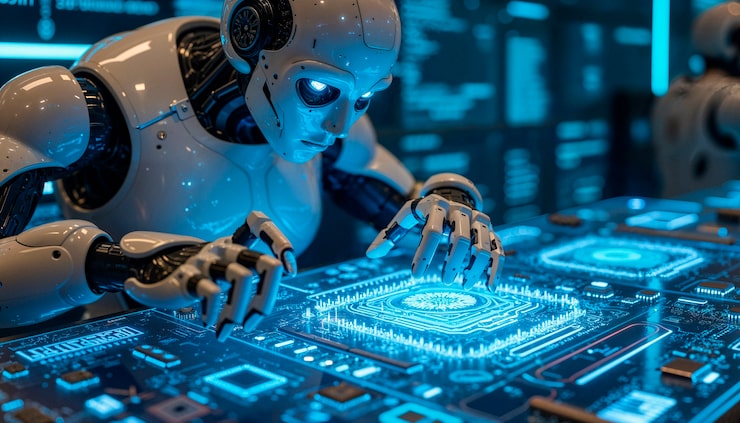
AI (Artificial Intelligence), through which software discovers patterns and learns from data, can assist in making better decisions, such as predicting peak traffic, optimizing routes, or detecting quality issues from photos or sensor signals.
2) IoT (Internet of Things)
The main idea of IoT is to link physical devices (dispensers, sensors, machines) to the internet so they can provide live reports, such as soap levels, foot traffic, humidity, or machine health.
3) Automation
Automation is the use of machines or software to do repetitive work in a reliable way. Examples are robotic floor scrubbers, UV disinfection systems, auto-dosing chemical dispensers, and workflow apps that automatically assign tasks.
Working in conjunction, these three technologies are turning cleaning into a proactive activity.
Examples of AI Cleaning Solutions
AI does not equal “robots that replace people.” The most common and useful AI applications in cleaning end up helping people work faster, safer, and more consistently.
1) Smart Scheduling and Workforce Optimization
One of the largest wastages hidden in cleaning is staff working in deserted areas while crowded ones are left dirty. AI scheduling tools can utilize data such as foot traffic, booking calendars, staff shifts, and historical service records to recommend the right cleaning intervals for each zone.
For example, the restrooms in a co-working space may need more cleaning in the middle of the day on event days, but the meeting rooms that were not used can undergo less cleaning. Hence, AI can fix the schedule automatically and support technology-driven cleaning services that are in line with real demand.
2) Route Optimization for Multi-Site Cleaning
If a business cleans multiple floors, buildings, or customer locations, AI is capable of minimizing the amount of travel and downtime. AI can plan teams based on their location, skills, and the priority level of the services, thus improving the response time without having to increase the number of cleaners.
3) Computer Vision for Quality Checks
Computer vision uses images from cameras to detect the appearance of issues such as spills, clutter, or even floor streaks, and the next step for large facilities is for the auditor to take pictures and AI to point out areas that need re-cleaning.
It’s not a “judging” tool, but different inspections become less subjective, and a standard of quality is achieved and maintained.
4) Predictive Maintenance for Cleaning Equipment
AI predicts when machines will fail by analyzing usage, motor load, battery cycles, and error patterns. Avoiding breakdowns is a significant benefit for technology-driven cleaning services since disruption of the hard-working equipment results in hasty work and overlooked tasks.
5) Safer Chemical and Process Recommendations
The platforms determine a list of chemicals and usage methods by analyzing the surfaces, the function of the room, and the extent of soiling. Thus ensuring that workers are not exposed to unnecessary chemicals. For guidance on the cleaning and disinfecting of facilities and the maintenance of public health during the COVID-19 Pandemic please consult the WHO environmental cleaning and disinfection guidance.
How IoT Sensors Take Cleaning From Blind Guessing to Immediate Reality-Based Action
Technology-driven cleaning services associate “technology” with “sensory organs.” The live status of various situations can be provided by sensors and connected devices, allowing for decisions to be made based on reality rather than assumptions.
1) Occupancy and Footfall Sensors
These sensors tally the number of people entering a zone such as restrooms, lobbies, cafeterias, or elevators. If the footfall exceeds a set limit, the system can instruct personnel to accomplish the task on-demand.
Result: Cleaners will be sent to the high-traffic areas more frequently, and less service will be done in areas of low usage. This results in better hygiene and less wastage of labor.
2) Smart Dispensers (Soap, Sanitizer, Paper)
Connected dispensers are able to send a signal indicating supplies are running low before the actual empty situation occurs. This is one of the simplest IoT changes, but it necessarily elevates the customer experience in offices, malls, and schools.
3) Air Quality and Humidity Sensors
In some settings, like healthcare, food service, and labs, air quality and humidity levels are important. Sensors can indicate conditions that cause odor, the formation of mold, or discomfort; thus, a targeted cleaning or ventilation can be carried out.
4) Leak, Spill, and Water Sensors
Leaks not only create a hazard for slips, but they also damage the property. IoT water sensors will be able to send an alarm to the cleaning personnel as soon as a leak occurs; therefore, the possibility of accidents is prevented, and costs for repairs are lowered.
5) Asset Tracking for Accountability
IoT tags can prove that a specific machine was used in a certain location at a certain time. When combined with staff check-in data, this creates a service trace that can be used for audits and gaining clients’ trust.
If you are involved in a facility and want practical guidance on baseline cleaning frequency, you may refer to this very strong and well-resear-ched document CDC guidance on when and how to clean and disinfect a facility.
Automation in Cleaning: Where Machines Help Most
Automation means a.) software-automation (workflows, reports, ticketing) or b.) physical automation (i.e., machines that clean). The best technology-driven cleaning services use automation, which adds reliability and reduces risk.
1) Robotic Floor Scrubbers and Vacuums
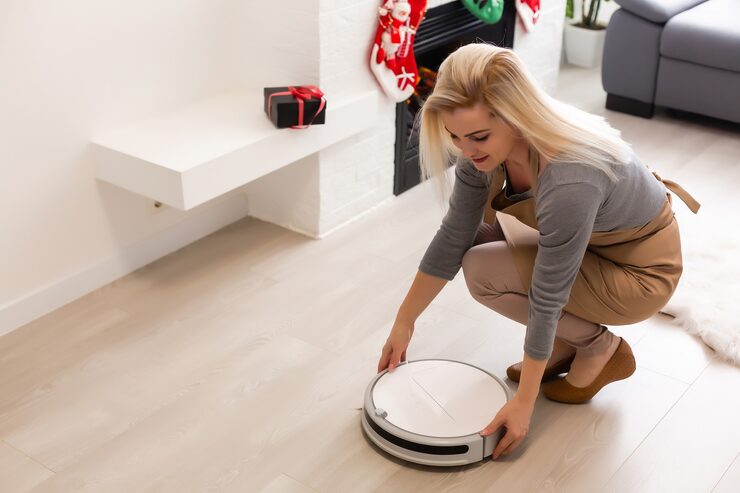
These kinds of cleaning robots are capable of handling large, monotonous floor areas such as corridors, shopping malls, airports, warehouses, and hotel hallways. They lessen the number of passes people make during the repetitive work, which frees cleaners up for the detail work, such as touchpoints, corners, toilets, and quality finishing.
Key fact: A robot technically still needs someone to set it up, watch it, refill it, and handle reworks if there is any. So the win is high-quality cleaning done faster and without drudgery for the cleaning staff.
2) Electrostatic Sprayers (Targeted Use)
When used properly, an electrostatic sprayer can give your targeted surfaces a uniform layer of disinfection. Many organizations opt to keep this method as a tool for just special occasions, and therefore, continue to rely on routine cleaning as their primary strategy for maintaining a healthy environment.
3) UV-C Disinfection Systems (Specialized Environments)
Among others, UV-C is used in healthcare and high-risk environments dis-infection scenarios to greatly add the cleanliness layer after manual cleaning. But remember, the first step of removing soil from surfaces is always required.
4) Automated Chemical Dilution and Dosing
Auto-dilution systems help cut chemical waste, guarding against the possibility of over-concentration, and hence, improve safety. This is a silent yet very powerful upgrade for technology-driven cleaning services, chiefly from the point of view of staff and surface protection as well as cost control.
In the selection of disinfectants as well as the verification of safe products, many organizations make a consultation of EPA’s “About List N” disinfectant resource their first step.
5) Workflow Automation Apps
This is where several service providers experience the most rapid improvement. Via mobile apps:
- Assignment of tasks can be done through the app by zone and priority
- Proof of service and timestamps can be captured
- Photos can be used to record problems
- Alerts for repetitive failures can be sent to supervisors
- Client-ready reports can be produced automatically
Consequently, miscommunication is reduced, and the term “quality” becomes visible.
How Technology-Driven Cleaning Services Are Different From One Another Across Industries
Different industries are distinguished by their respective technology adoption levels and patterns. Here are some typical examples from various sectors:
Offices and Corporate Buildings
- Restrooms and shared kitchen areas footfall sensor
- Smart dispenser stockouts prevention
- AI for office attendance patterns-based scheduling
- Digital auditing and checklists
Hospitals and Clinics
- District cleaning with strict auditing through zone-based protocols
- UV-C is an add-on in specific rooms
- Equipment tracking and compliance documentation
Hotels and Hospitality
- Check-in/out data-driven room turnover optimization
- Predictive staffing for peak days
- The housekeeping team consistently performs well
Schools and Universities
- Smart scheduling around the school timetable
- Primary focus on high-touch surfaces and shared zones
- Spills and mess real-time reporting
Retail, Malls, and Airports
- Robots sent to cover large floor spaces
- On-demand tasks triggered by traffic
- Central dashboards for multi-site management
Homes (Premium/Modern Households)
Residential cleaning is transforming as well:
- Smart reminders and recurring plans
- Digital before/after checklists
- Option for eco-optimized product usage
- Better consistency across visits
Main Benefits of Technology-Driven Cleaning Services
1) Clear and Measurable Quality
Through digital logs, audits, and sensor signals, verification can be made. This builds trust with clients and helps teams improve systematically.
2) Quick Reaction to Genuine Issues
Spill alerts, low-stock notifications, and traffic-based triggers help teams know exactly when to act.
3) Enhanced Safety of Staff and Visitors
With automation, teams reduce exposure to harsh chemicals and repetitive strain, and response to incidents becomes faster, hence less chance of slips and hazards.
4) Cost Control Without Cutting Corners
AI plays a major role in reducing labor wastage. Automated chemical dosing minimizes the disposal of chemicals. Predictive maintenance keepocheaper periods through less downtime.
5) Sustainability
Cleaning less means reduced use of water, chemicals, and disposable supplies. This happens even as hygiene is maintained.
Challenges and Risks To Be Considered
Though strong, technology-driven cleaning services are not capable of working like “set and forget.” When planning these issues should be considered:
1) Data Privacy and Cameras
When using computer vision or cameras, it is important to agree on explicit guidelines, e.g., where cameras are allowed, how images are stored, and who has access to them.
2) Cybersecurity for Connected Devices
If not taken care of, IoT devices may serve as gateways for attackers. This can be mitigated through vendor vetting, network segmentation, and device security baselines. A reliable recommendation is NIST’s Cybersecurity for IoT program.
3) Training and Change Management
A perfect system is still doomed if staff do not adopt it. Therefore, teams require easy workflows, visible benefits, as well as instant support in case of device or app malfunctions.
4) Over-Reliance on Dashboards
Your sensors might fail, batteries may die, and data can sometimes be noisy. Nevertheless, you should view your technology as an aid to smart supervision rather than a substitute for it.
5) High Initial Expenses and Justifying ROI
Start by focusing only on areas with the greatest impact (restrooms, lobbies, large floors). Measure and prove gains before scaling.
How to Choose a Provider Offering Technology-Driven Cleaning Services
Here is a checklist that you can use to separate real capability from marketing buzz if you are hiring:
- Do they explain how AI decisions are made (not just “we use AI”)?
- Can they show sample reports and audit outputs?
- Which IoT devices do they install, and who maintains them?
- How do they handle outages or sensor failures?
- Do they provide staff training and SOP updates?
- Can you customize cleaning frequencies by zone and risk level?
- Do they have clear data privacy and cybersecurity policies?
- If needed, can they integrate with your facilities system (ticketing, access control, BMS)?
A good provider will base the focus on outcomes: time to respond, audit scores, number of complaints, and supply stockouts.
How to Build Technology-Driven Cleaning Services (For Agencies and Service Providers)
It is suggested that if you are a cleaning company and you desire to upgrade your operations, you should layer:
Layer 1: Digital Fundamentals (Week 1–4)
- Mobile checklists per client/site
- QR code zone check-ins
- Issue with photo reporting
- Simple dashboard and weekly client report
Layer 2: IoT Improvements (Month 2–3)
- In high complaint regions, use smart dispensers
- Footfall sensors for restrooms and entrances
- Auto-task triggers and alerts
Layer 3: AI Optimization (Month 3–6)
- Dynamic scheduling based on traffic patterns
- Predictive maintenance tracking
- Analysis of quality trends by cleaner, zone, and shift
Layer 4: Physical Automation (As Needed)
- Robotic scrubbers for large floors
- Auto-dosing systems for chemicals
- Specialized disinfection add-ons were justified
Instead of simply flaunting your equipment, show before/after outcomes to win your clients’ trust.
Future Trends: What’s Next in Tech-Powered Cleaning?
- Demand-based cleaning as standard (performance outcomes over fixed hours)
- Enhanced interoperability (sensors + apps + machines on the same platform)
- Increased use of AI in training and coaching (less rework, more consistency)
- More comprehensive sustainability reporting (evidence of less chemical/water usage)
- Security and compliance become a selling point (operations that are audit-ready)
Summary: Cleanliness That Can Be Managed, Proven, and Improved
AI, IoT, and automation are not just gimmicks; rather, they are tools that help in getting the work done by cleaning staff more reliably, quickly, and measurably. The most efficient technology-driven cleaning services do not get dazzled by “cool tech.” They use technology to solve real problems: inconsistent quality, wasted labor, stockouts, slow incident response, and lack of visibility.
In case you are looking to contract cleaning services, always opt for providers that can demonstrate a balance between data, workflows, training, and a clear plan for privacy and cybersecurity. For a service provider, start with digital workflows and reporting, and add IoT and AI where they bring measurable impact. If done right, technology-driven cleaning services result in a cleaner environment—and a cleaner way to run the business behind it.
FAQs
1. What are technology-driven cleaning services?
Services using AI, IoT, and automation to improve cleaning efficiency, safety, and consistency.
2. How do AI and IoT improve cleaning efficiency?
They optimize schedules, monitor foot traffic, predict equipment failure, and automate repetitive tasks.
3. Are automation tools safe for staff?
Yes, they reduce exposure to chemicals, repetitive strain, and ensure controlled, precise operations.
4. Can technology-driven cleaning services reduce costs?
Absolutely. AI and automation minimize wasted labor, chemicals, and energy, improving ROI.
5. How do I choose the right provider?
Check AI usage transparency, IoT devices, staff training, privacy policies, and measurable outcomes.
Conclusion
Technology-driven cleaning services are no longer optional—they are essential for modern facilities. AI, IoT, and automation ensure cleaner spaces, safer staff, cost savings, and measurable results.
Take Action: Upgrade your cleaning operations today by implementing smart workflows, AI scheduling, and IoT monitoring. Choose providers who balance technology, training, and privacy for maximum impact.