
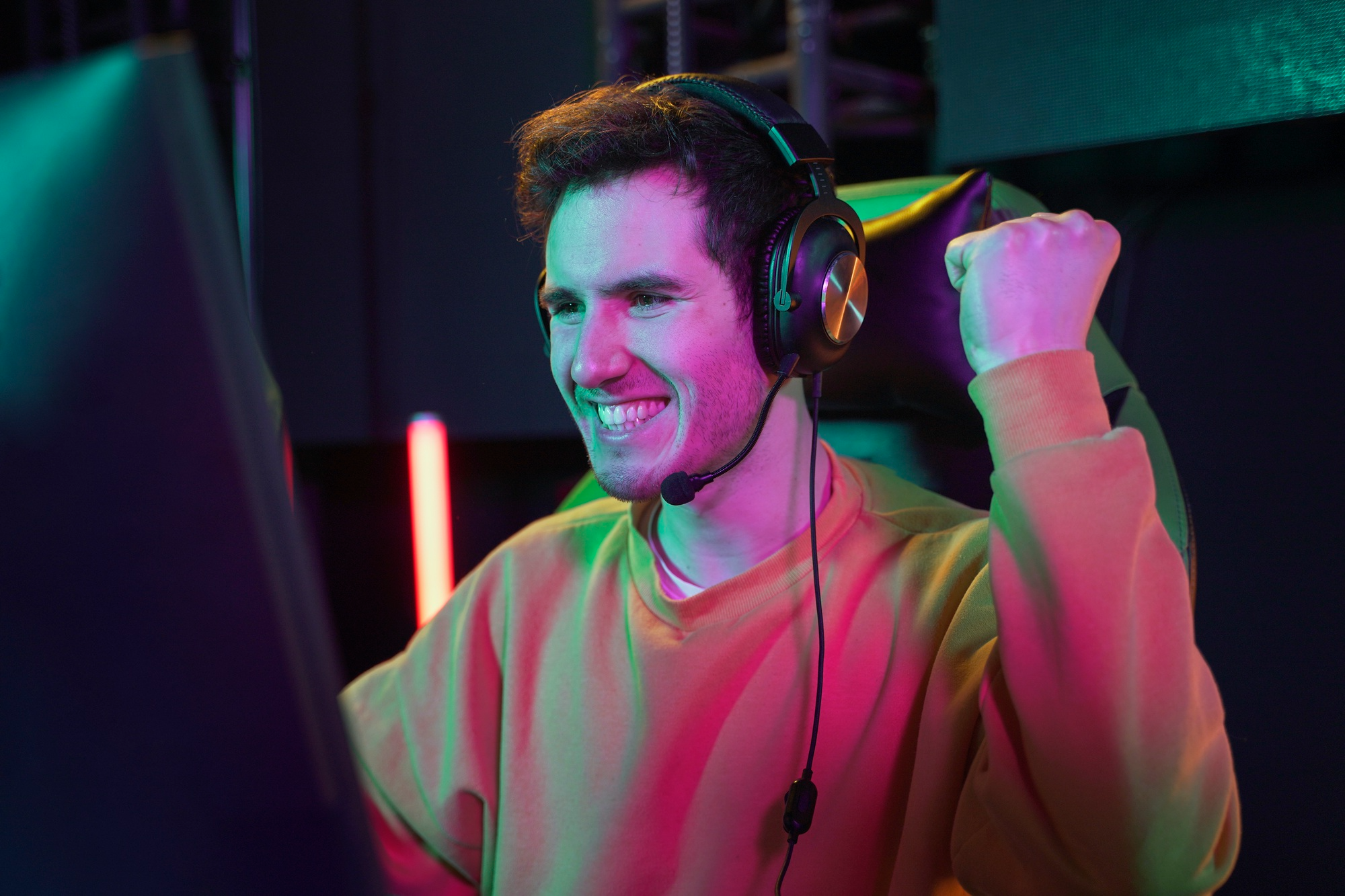
You can relate, can’t you? Your heart is thumping so loudly that you can hear it through your ribs, your hands are slightly sweating, and the entire universe has shrunk to just the pixels on your screen. You really feel that you are only one precise tap away from winning. That excitement is not only about simply playing a game; it is about demonstrating that you are the best. This urge for adrenaline has been extended to the level of gamer challenger – the place where skills on a digital device merge with real-life opportunities.
The time when gamers used to play solely for bragging rights is almost over. A gamer challenger in today’s competitive ecosystem is not just a mere participant but a member of a sophisticated network where every match counts. It is a place where tactics, reflexes, and scientific know-how combine.
Here is the best part of it all: the stakes have changed. When you enter a gamer challenger arena, you are not just unlocking achievements; you have the opportunity to win prizes ranging from cash to luxury gaming hardware.
This article is a comprehensive look at the world of competitive gaming. We will look at the technology that makes these tournaments possible without interruptions, the tactics you need to dominate the leaderboard, and how you can become a serious contender from a weekend warrior.
What is a Gamer Challenger?
More than just a gamer, a gamer challenger is essentially a participant of an event on a platform where gamers can interact in a digital world set up in a game. To help you better understand, a casual gaming session on a Sunday is less like a skill-based verification system when compared to a challenger tournament.
By joining a challenger’s environment, you immerse yourself in a carefully designed system that measures performance in an objective way. It removes luck that is sometimes a part of public matchmaking and substitutes it with a standardized competitive framework.
The Scope of Competition
People tend to believe that only professional esports athletes can compete in this space, when in fact it is quite the opposite. One of the main factors that attracts gamers to these platforms is the separation of different skill levels.
- Daily Casual Lobbies: These are relaxed environments that may be used for warming up or experimenting with the new strategies. There are lower stakes, but the competition is still more serious than in a public game.
- Weekly Brackets: This is where the excitement starts to build up significantly. The participants are required to sign up and follow the schedule just like in professional tournaments.
- High-Intensity Seasonal Tournaments: In these main events, there are thousands of players, major prize pools, and the level of scrutiny that separates amateurs from the pros.
The Skill Set: The “Mental Meta”
Only having quick reflexes will not bring a gamer challenger to the top. The real separator is the “mental meta.” It consists of the psychological and intellectual sides of the competition. It entails flexibility—the capability of altering your game strategy when the initial plan has failed. It also requires the ability to focus constantly during a challenging five-game maximum series. Besides that, it is all about the strategic trick of putting your opponent, who is equally skilled mechanically, at a disadvantage.
How to Compete and Win Prizes
Getting into the realm of competitive gaming may be quite intimidating at first, and the entry requirements might seem like a barrier at first. Here is a simple guide to help you take that first small step and prepare yourself to win prizes.
Getting Started (Step-by-Step)
- Account Creation and Verification: The first and foremost step would be to prove that you exist. In order to maintain fairness, these platforms put a good deal of their focus on security, given that real rewards are to be won. Most probably, you will be faced with a comprehensive verification procedure in which you might be asked to connect your gaming profiles and even install anti-cheat software.
- Selecting the Right Bracket: Do not agree to fight an opponent way above your level of experience from the onset. A majority of gamer challenger platforms are equipped with an ELO or MMR (Matchmaking Rating) system. Choose the bracket where your present skill level fits. Coming out on top in a bracket significantly below your level is much better for your confidence (and your wallet) than being drawn and quartered in the pro division.
- Understanding the Rules of Engagement: Every tournament has its own ruleset. This might involve specific map bans, character restrictions, or scoring formats. Read the fine print before the countdown starts.
Strategies for Success
Getting in is only half the battle. How to win, you might ask? It is a matter of planning, keeping your cool, and thoroughly going through every move step by step.
- Preparation: Your computer is your toolbox. Make sure that the DPI of your mouse is steady, that the keys on the keyboard are promptly registering, and most importantly, that your internet connection has no interruptions. High ping is the silent enemy of any gamer challenger campaign.
- Execution: You need to understand the “meta”—the most effective tactics currently available in the game. However, true challengers know how to counter the meta. If everyone is using a specific weapon or strategy, find the weakness in that strategy and exploit it.
The Reward Structure
Ever wondered why we do this? Yes, the chance to win prizes is a great attraction. The different payout structures in the ecosystems are usually:
- Real-World Cash: Direct payouts to PayPal or bank accounts. This is common in higher-tier tournaments.
- Cryptocurrency and Digital Assets: Many modern platforms are integrating blockchain rewards, offering tokens or stablecoins.
- Hardware and Merch: Sponsorships drive many of these events. Winning a tournament might net you the latest GPU, a high-refresh-rate monitor, or exclusive branded apparel.
The majority of tournaments run their rewards spread over several levels, which means the best 10% players get some recognition. On the contrary, a few massive playoff tournaments decide to take the “winner-takes-all” approach, with the champion receiving the entirety of the prize pool.
Leveling Up Your Skills
If the player in a gamer challenger environment stays still, they might as well have taken a step backward. The competition is always evolving, finding different angles and optimizing efficiency. To keep yourself relevant, you have to have a growth mindset.
The Growth Mindset
The acceptance of the process of improvement as the main thing in life is something you have to develop. A defeat against an opponent isn’t a failure; it is a chance to examine what happened. Just like losing a match is data reflecting a mistake you made on the positioning or lack of knowledge. A real challenger is more interested in learning from the mistakes made in the loss than applauding the winning ones because the loss provides knowledge on what should be fixed.
Training Regimens
- VOD Review: For most players at the amateur level, this is the tool that is left sitting in the cabinet. Make a recording of your gameplay and watch it later. You will definitely be astonished by the errors you will discover when you are not in the middle of the heat of the battle. Find out what has caused your deaths and what kind of pattern is revealed in the loss of objectives.
- Aim Trainers and Logic Puzzles: Mechanics need to be taken care of. Third-party aim providers can offer you controlled exercises for the development of automation. However, don’t forget about your brain—logic puzzles can help with decision-making speed under pressure.
Success Stories
“Nova” is a profile of an open-bracket player from whom we can see the different stages of progress that a successful player has gone through. They were not a fast aimer, but they knew the game inside and out. By doing VOD reviews to identify flaws in their positioning and daily challenger lobbies to get their consistency up, Nova was able to go from the 50% bottom margin to the 1% top margin in just six months. Then, Nova took a victory in a seasonal major and eventually had the first sponsorship deal. This way is open to anyone as long as they make the effort.
The Technology Behind Gamer Challenger

During the game, the devices are sending thousands of signals, and the technology at the back-end stands as the unrecognized entity that is successfully performing the role of a silent hero.
Infrastructure and Low Latency
Latency is what kills a competitor. In order to avoid that, platforms for competition make use of server networks that are distributed. When you place servers closer to players geographically, you reduce the distance that data must physically travel. You can be sure of this that the click on your mouse will be registered immediately on the server.
The Platform Event Trap
Things get technical at this point. Who has the system declared the winner? How does it verify that the headshot was really made? The answer is that there is a mechanism that is called the platform event trap.
In software language, an “event” is an action that is performed within an application – a login, a kill, a match completion. The platform event trap is an extremely intricate listener that resides on the backend. It patiently waits for these specific triggers to be present. Whenever you win a match, the system “traps” that particular piece of information immediately.
Firstly, it is an anti-cheat measure: it checks if the action is humanly possible and is still within the game rules. Secondly, without a robust platform event trap, disputes would be rampant, and automated tournaments would be impossible.
Scalability
Picture yourself thinking of the Grand Finals server load. Traffic will increase by 500% within several minutes. In order to prevent crashes, these platforms use elastic cloud computing. Hence, such a server capacity can automatically “scale up” to meet demand and “scale down” when the tournament ends. This elastic behavior prevents the last kill of the tournament from being lost due to a server crash.
Community and Social Aspects
A gamer challenger platform is not just a fighting arena; it is a meeting place. It is a point of contact where you can meet your future teammate(s) with the same style of play as you, your challenger, who will motivate you to be better, and the one who has already walked the path you are on and is ready to be your guide.
Collaboration vs. Competition
It may seem illogical, but collaborating is the key to competition. Forums and Discords in these challenges even function as repositories of knowledge. Players exchange loadouts, unearth map secrets, and chat about the patch’s latest feature. Contact with this community speeds up the timescale of your learning curve. You don’t have to figure it all out on your own.
Social Features
Platforms integrate very rich social features to keep the engagement high even when you have been eliminated. Spectator modes enable you to view the top players at the same time live and learn from their thinking patterns. The live chats also create a stadium-like atmosphere during major matches. The guild systems make it possible for groups of friends to compete together, thus adding a layer of camaraderie and tribalism to the mix.
Future Trends in Gamer Challenges
It is important to us to be aware of the new trends in the gamer challenger space, especially since technology is evolving at such a rapid pace.
Emerging Tech: VR and AR
The challenger area is soon to be invaded by Virtual Reality (VR) and Augmented Reality (AR). Just picture the scenario when you are not only controlling your avatar on a screen but also physically dodging incoming fire, standing in a VR arena. Skills will no longer be limited to finger dexterity only, but whole-body athleticism will also play a role.
AI Integration
Artificial Intelligence (AI) will play a major role not only in training but also in a wide range of usages in the future. Soon, platforms could create “training ghosts” – AI opponents that imitate the style of play of top professionals, which means you will be able to challenge and practice against the best strategies without ever going public. Also, dynamic difficulty curves could be the result of AI, constantly adjusting the challenge level to your performance.
Evolution of Rewards
Prizes are changing as well. Although cash will always be the king of prizes, we might witness a gradual shift towards the usage of interoperable digital assets. Wouldn’t it be great to find that you have just won a unique “skin” or weapon at a tournament, and you can then transfer and use it in a completely different game? So, your digital victories will have such a long-lasting impact.
FAQs
1. What is a gamer challenger platform?
A gamer challenger platform is a competitive gaming environment where players participate in organized tournaments and skill-based matches. These platforms use ranking systems, anti-cheat tools, and structured brackets to ensure fair and performance-based competition.
2. Do you need to be a professional gamer to join Challenger tournaments?
No, challenger platforms welcome players of all skill levels. They offer different brackets such as casual lobbies, weekly tournaments, and high-level seasonal events, allowing beginners and experienced players to compete comfortably.
3. How can players earn rewards through gamer challenger competitions?
Players can earn rewards by winning matches or ranking high in tournaments. Rewards usually include real cash payouts, cryptocurrency, gaming hardware, merchandise, or digital gaming assets.
4. What skills are most important to succeed as a gamer challenger?
Success requires more than fast reflexes. Players need strong strategic thinking, adaptability, focus, and knowledge of game mechanics. Reviewing gameplay, practicing regularly, and understanding the current game meta also help improve performance.
5. How does technology ensure fairness in gamer challenger tournaments?
Advanced technologies such as anti-cheat software, platform event traps, and low-latency server networks monitor gameplay and verify match results. These systems help prevent cheating, reduce lag, and maintain fair competition for all players.
Conclusion
The path of a gamer challenger does not stop evolving. It is initiated by a passion for a game and then grows into a quest to become a master. We have examined the complex ecosystem that facilitates this, from the psychological “mental meta” to the efficient platform event trap technology that guarantees the fairness of all victories.
It is easier than ever to get through the gates, but it is still possible to go beyond all bounds of performance. The prizes are real, the community is waiting, and the technology is ready.