
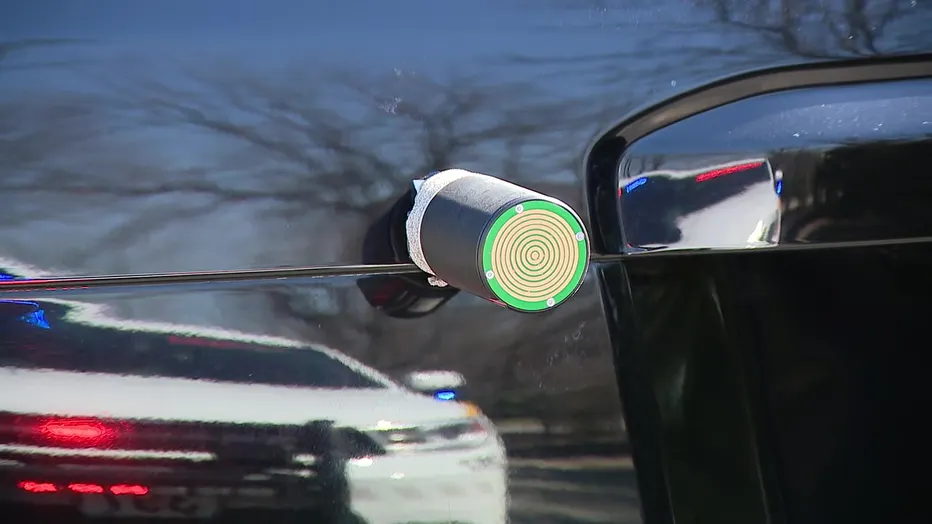
There is something almost iconic about a police “stakeout” scene: the two officers in an unmarked car, sharing stale coffee while one of them peers through binoculars. Of course, the human element of intuition and direct visual surveillance certainly still has its place. However, the reality of the situation has changed quite significantly and technology nowadays has become the main tool in modern policing.
Among a wide range of technological aids, a GPS tracker for police is the most foundational element in the law enforcement arsenal of today. Nowadays, such devices have evolved beyond simply tracking locations. They have become indispensable tools in apprehending suspects, managing police fleets, and ensuring the safety of officers. Thus, by making real-time location information part of their activities, law enforcement agencies can see and use resources more effectively, safely, even efficiently.
This full guide takes a thorough plunge into police tracking technology. We are going to discuss where these devices came from, what kind of features make up the best police-grade hardware, various usages from bait cars to search and rescue, and the legal framework around their use.
The Evolution of Tracking in Law Enforcement
Law enforcement’s adoption of location technologies parallels the telecommunications revolution in general. Knowing the technological lineage naturally raises awareness of the things police can do nowadays with GPS trackers.
From Radio to Satellite
Before the digital era, the technology of radio frequency (RF) triangulation was a primary method of tracking. This method necessitated the involvement of several units—usually those on the ground and in the air—to trace the source of the signal coming from a device placed on the target car. Such a method consumed a lot of resources as it demanded continual coordination between the involved different units, as well as skilled operators who could interpret signal strength and direction. If the subject left the range or entered a place where the signals were blocked, the unit in pursuit became lost.
GPS introduction shifted the paradigm drastically. By using a network of satellites, GPS can locate the exact position of something. This means that the precision of the location given through the GPS is so high that in effect law enforcement now have the ability to track the exact position of the individual instead of the previous method by which the approximate location was given. Initial GPS adoption was costly and bulky, but as the technology advanced, it became available for departments of all sizes.
The Digital Shift
The turning point in the evolution of technology is not simply the connection with a satellite; rather it is data assimilation. Nowadays a police GPS tracking device is more than just a location device: it is a highly sophisticated set of various sensors and communication modules that can be seen almost as a “black box” in a vehicle. Such device enables not only the tracking of current location but also reports the speed at which the vehicle was moving, the points where it was stationary and for how long the engine was running at idle, as well as the exact route followed.
Those digital capabilities additionally permit historical reconstruction of the GPS data. Detectives are able to review past movements to identify the lifestyle pattern of the target, pick out the accomplices, or validate the statement of a witness. Also, the location data can be integrated with other software used by the police, such as Computer Aided Dispatch (CAD) and crime mapping systems, so that mere raw location data is transformed into an actionable intelligence.
Essential Features of Police-Grade GPS Trackers

GPS consumer devices for the purpose of finding keys or pet tracking are far different from those used in law enforcement. Very high standards of reliability, invisibility, and capability of handling large amounts of data are required for police operations.
Stealth and Deployability
In covert operations, the element of surprise is paramount. Police-grade trackers are designed for “slap-and-track” deployment. These units often feature powerful industrial magnets that allow an officer to attach the device to the undercarriage of a suspect’s vehicle in seconds. The casing is ruggedized and weather-proof (often rated IP67 or higher), ensuring the device can withstand rain, snow, mud, and road debris without failing. The aesthetic is deliberately nondescript—usually a matte black box that blends into the chassis of a car to avoid detection during a casual inspection.
Real-Time Data Transmission
There are two main types of tracking data retrieval: passive and active. Passive loggers record data to internal memory, which must be downloaded physically after retrieving the device. While useful for historical analysis, modern policing increasingly relies on active trackers.
Active trackers utilize cellular networks (4G LTE or 5G) to transmit location data in real-time. This allows surveillance teams to monitor a suspect’s movement live from a command center or a mobile device. This capability is crucial for tactical decisions—knowing exactly when a suspect is approaching a stash house or leaving the jurisdiction allows for coordinated interceptions without the need for high-risk, bumper-to-bumper tail.
Geofencing Capabilities
Geofencing is one of the most powerful software features paired with hardware trackers. Officers can draw virtual perimeters around specific geographic areas on a digital map. These could be a city limit, a suspect’s known residence, a school zone, or a high-crime area.
Once the tracker crosses any of these virtual borders—either going in or out—the law enforcement officers get an alert sent to their mobile phones or e-mails. This use of automation, in a sense, acts as if the officers have been “multiplied by a factor of x”. Instead of constantly monitoring, detectives can handle other tasks and still be sure that they will receive an instant notification should the target make a move.
Battery Life and Power Management
It is not easy to get hold of a device in the middle of a long surveillance after which you realize the need to recharge it. Thus, battery life of police tracking GPS devices is of paramount concern.
At the top end of the scale, the devices can work on one battery charge for weeks or even months, depending on how often the device reports (ping rate). Smart power management functionalities enable a device to switch to “sleep mode” when the car is not moving, thereby saving battery, and then “wake up” when the accelerometer registers motion.
Key Applications in Modern Policing
The utility of a GPS tracker for police extends far beyond simple surveillance. These devices have found their way into various aspects of law enforcement operations.
1. Covert Surveillance and Suspect Tracking
One of the main reasons for GPS trackers is to track criminal suspects. Putting a tracker on a car can be a great way of helping officers keep away from the target while still monitoring them thus risking less their getting detected. The “loose surveillance” method can be used very effectively to go after such criminal groups as those involved in the drug trade or organized crime where the members are always extremely cautious about being followed, checking their rear mirrors constantly, and changing routes frequently.
Additionally, police safety is greatly enhanced by GPS tracking simply because it serves as a tool for reducing the occasions of dangerous high-speed pursuits. A ‘tagged’ back-up car can be used remotely by the chase at a safe distance therefore as soon as the police tag a suspect vehicle, they can stop following him right behind the car. The ‘chaser’ can be the police helicopter or some units further down the road. Such de-escalation of adrenaline among the parties wave off the risk of car crashes and other collateral damages which are always the unfortunate outcomes of high-speed pursuit/drugs chases.
2. Fleet and Asset Management
Not all tracking is about catching bad guys; much of it is about internal efficiency. Departments use GPS fleet tracking to manage their own resources. Command staff can see the real-time location of every patrol car, allowing dispatchers to send the closest available unit to a 911 call. This reduces response times and can save lives in critical emergencies.
Besides, it permits the creation of a robust system of accountability. The use of fleet data allows checking if the officers are carrying out their patrols in the designated areas and if they are not taking any unnecessary breaks. It provides an objective record of vehicle usage, maintenance needs, and fuel consumption, helping departments optimize their budgets.
3. Bait Operations
“Bait car” initiatives are one of the ways in which law enforcement agencies hold the upper hand against the thieves as far as motor vehicle theft is concerned. Police prepare a vehicle with hidden cameras, a GPS tracker, and remote control capabilities (like locking the doors and engine kill-switch). The car is parked in the high theft area, unlocked and with the keys left inside.
When the car is stolen, the transmitter sends an acknowledgment to the dispatch immediately. Officers who are following the route can view the vehicle’s speed and direction on their screens. Before doing these operations the law enforcement authorities should always make sure that they make the car become powerless at a safe distance from where the arrest is to be made. Thereafter, they can remotely disable the engine, locking the suspect inside until the patrol units arrive. The same method is applied to “bait packs” if the robberies are bank or package-related ones, where money or goods are fitted with tiny trackers that direct the police straight to the thieves.
4. Officer Safety and Search & Rescue
In rural areas or during foot pursuits, knowing an officer’s exact location is a matter of life and death. Personal trackers worn on uniforms or integrated into body cameras ensure that dispatch always has visibility on their personnel. If an officer calls for backup but cannot speak, their location is already known.
This technology is equally vital for Search and Rescue (SAR) teams and K9 units working in dense forests or difficult terrain. Trackers allow incident commanders to see exactly which areas have been searched and where their teams are, ensuring a methodical and safe operation.
The Strategic Benefits
Innovative GPS technology presents tactical benefits that can be transformed into strategic assets.
Resource Optimization
Physical surveillance using plain clothes investigators is one of the most highly labor-intensive methods of tracking a person. To keep a suspect under constant 24/7 observation requires multiple police teams working in different shifts, using up fuel, and paying overtime. A single GPS device can match the capability of an entire surveillance team, unlike a human which will get tired, the GPS tracker can reliably provide round-the-clock monitoring. This, in fact, frees up officers that can then be reassigned to other investigations, or for community policing, and the like.
Evidentiary Value
In trial cases, evidence is paramount. A GPS log is one such tool that serves as an unquestionable piece of evidence. Through such a log, it would be possible to verify a timeline, to prove a mistake in an alibi, or to establish that a suspect was present at a location at a specific time with great accuracy. In contrast to witness testimony, which can be challenged as unreliable, the GPS digital footprint is reliable and therefore hard to dispute. This can be an excellent negotiating tool in cases where plea agreements are possible resulting in significant time and cost savings for the judiciary system.
Public Safety
Achieving maximum public safety at minimal cost seems like the ultimate goal of any police officer. By the use of electronic monitoring, police have many opportunities to reduce the number of risky encounters on the roads. GPS technology enables law enforcement to exercise more control over arrest situations, thereby increasing the level of safety not only for the officers but also for the suspects and other bystanders.
Legal and Ethical Considerations
With great power comes great responsibility. The deployment of surveillance technology is subject to strict legal and ethical scrutiny.
The Warrant Requirement
US law regarding GPS tracking was dramatically changed by the Supreme Court verdict in 2012 in the case of United States v. Jones. The Court announced that putting a GPS on a person’s vehicle for tracking is a search under Fourth Amendment. Therefore, law enforcement agencies are mostly required to have a probable cause warrant before installing a GPS device on someone else’s vehicle.
This legal bar serves as a check on the continued use of technology for legitimate purposes only and not for arbitrary spying. The police, therefore, have to convince a judge that there is sufficient reason that tracking the vehicle will result in finding evidence of a crime.
Privacy vs. Security
The debate on achieving the right balance between privacy and security continues. Opponents of mass surveillance are concerned about the potential and “Big Brother” aspect of tracking technologies. However, for the trust of the public to be retained, transparency is extremely important. Law enforcement agencies should shed light on their tracking policies and demonstrate that they are targeting criminal activities rather than doing a general surveillance of the population.
Data Retention
Data management is another aspect that requires attention. Tracking data should not be retained for an excessive period. Apart from that, it is also important to keep strict records on the chain of custody and access to data. Agencies have to set up clear rules on data disposal.
Storing data indefinitely poses a privacy risk and a liability for the agency in question. On the other hand, deleting data too soon may result in the loss of states that could be useful for old cases. Putting data in a secure, encrypted storage and keeping a very strict log of who had access is fundamental to ensure that the data is not tampered with.
Frequently Asked Questions
Do police need a warrant to put a GPS tracker on my car?
The answer is usually “yes”. Following the decision of the United States v. Jones case, a GPS device placed on a vehicle owned by a private person is considered a search under the Fourth Amendment. However, there are exceptions; for example, when the subject consents (owner consents) or some border security contexts. If the vehicle in question is not on private property but the monitoring only includes public movements, the rules may be different although the best practice for evidence admissibility in court is a warrant.
Can a GPS tracker work if the suspect parks in a garage?
Standard GPS requires a direct line of sight between the receiver and the satellites. Thus, a signal might be blocked in an underground or concrete parking garage. Yet, many modern trackers use cellular triangulation or Wi-Fi sniffing as a backup method to provide a rough location, even in the absence of a satellite signal. The accurate GPS signal will be reinitiated as soon as the vehicle leaves the garage.
How long does the battery last on a police GPS tracker?
Depending on the model and “ping rate” (how often the device reports its location), battery life may vary considerably. A tracker which updates its location every five seconds will consume more battery power than one that updates its location every ten minutes. Models that are equipped with the latest law enforcement technology can last from two weeks to six months on a single battery charge depending on usage and power-save settings.
Are police trackers different from the ones I can buy online?
Police trackers differ from ordinary ones in many aspects besides sharing the same underlying GPS technology. Police-grade GPS trackers are significantly more durable, stealthy, and secure in terms of evidence. They consist of stronger magnets, higher waterproof ratings, better battery life, and frequent connection to secure, encrypted servers that comply with the chain-of-custody requirements for evidence.
The Future of Tracking
The GPS tracker for police has revolutionized law enforcement, moving investigations from the analog age into the digital era. From enhancing officer safety to providing irrefutable evidence in court, the benefits are undeniable. However, this power must be wielded with strict adherence to constitutional rights and proper oversight to maintain the delicate balance between effective policing and civil liberties.
As we look to the future, we can expect further integration of Artificial Intelligence. AI could predict suspect movement patterns based on historical data, allowing police to be proactive rather than reactive. As technology continues to evolve, so too will the strategies used to keep communities safe.
If your agency is looking to modernize its surveillance capabilities, now is the time to audit your current tech stack. Ensure your policies are up to date with the latest regulations and that your hardware is ready for the demands of 21st-century policing.
FAQs
1. What is a GPS tracker for police used for?
It helps law enforcement track vehicles, manage fleets, monitor suspects, and improve officer safety.
2. How is police GPS tracking different from old tracking methods?
Modern GPS uses satellites and real-time data, while older methods relied on radio signals and manual tracking.
3. What key features do police-grade GPS trackers have?
They offer real-time tracking, geofencing alerts, long battery life, and strong, hidden installation.
4. How does GPS tracking help police operations?
It reduces the need for risky chases, improves response times, and provides strong evidence for investigations.
5. Do police need permission to place a GPS tracker on a vehicle?
In most cases, yes. Law enforcement usually needs a legal warrant before installing a tracker.
Conclusion:
GPS trackers have become an essential tool in modern policing. They help officers track suspects, manage resources, and improve public safety. However, their use must follow legal rules to protect privacy while maintaining effective law enforcement.