
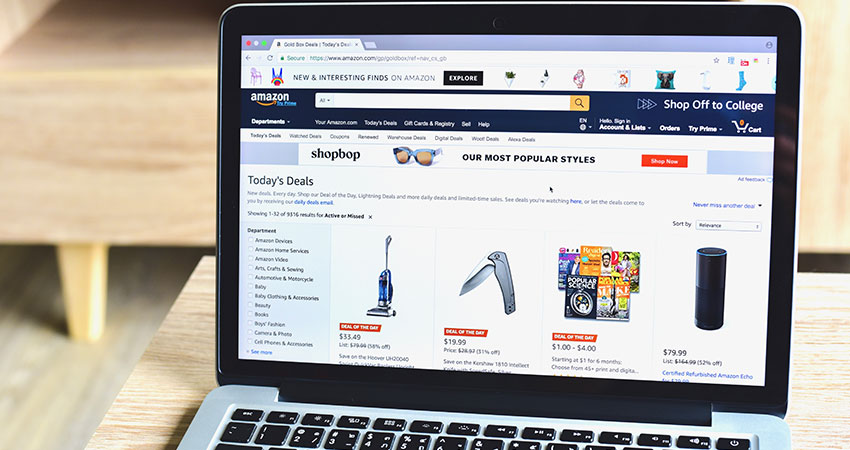
After your cup of morning coffee, the Amazon ecosystem will have processed millions of transactions. Indeed, the sheer scale of Amazon as a platform in 2026 is unimaginable as user engagement reaches record levels and sales volume keeps rising. However, for people involved in this digital economy, the figures are not just lovely facts – they signify a changing world of opportunities and risks.
Following Amazon Marketplace news today is now a must for businesses if they want to survive and for customers if they want to get the best deal. The platform is never at rest, whereas the 2026 updates represent some of the most radical changes in the company’s history. We notice that instead of the usual search-and-buy model, the new one is a predictive, AI-driven experience that even anticipates your needs before you can express them.
This paper explains the big changes that characterize the marketplace this year. We will discuss the main strategic changes for sellers as well as the new situation for buyers starting from the radically changed fee structures which require a re-thinking of the budget to a new highly personalized shopping interface. Whether you are a seller or a buyer, here are the things you should know to get through the platform in 2026.
2026 Key Amazon Marketplace Seller Updates
In merchants’ eyes, the rules of the game have changed. It is hard to recognize the operational and financial conditions of selling on Amazon in 2026 compared to what they were just a few years ago. These changes in Seller Updates are mainly caused by two factors: very ambitious sustainability goals and the introduction of next-generation artificial intelligence.
New Fee Structures Unpacked
For sellers using Fulfillment by Amazon (FBA) it was probably very clear that there would be some fee adjustments. When the changes were just announced, the impact started to become clear. To focus on highly compact products with rapid sales turnover preparation is what Amazon has done with referral fees and FBA costs, at the same time, it is punished more than ever by inefficiently stored inventory.
The most significant statement made regarding Amazon Marketplace news today is the launching of the “Sustainability Surcharge” which will be a compulsory fee applied to those products that lack eco-friendly packaging. Amazon has stopped “encouraging” sustainable behaviors and started to “reinforce” them financially. On units using non-recyclable plastics or excessive void fills, sellers are receiving the sustainability surcharge of up to 5%. On the other hand, sellers that comply with the “Ship in Own Container” (SIOC) are benefitting from small reductions in the fees.
People are going to be very upset that such changes require an immediate recalibration of their budgets
Future of Advertising
Recently, advertisers were struggling only by bidding on keywords contests. The introduction of “Predictive Placement” ads, in 2026, will allow a promoter through the usage of state-of-the-art AI to show the ad of his product to the potential customer before such a customer would even think of a certain search term.
Let’s say you are a person who is buying protein powder every six weeks. Predictive Placement will make sure that your competitor’s brand will appear either in your social media or on your homepage three days before you run out of your protein.
Besides that, changes in billing structure are already visible. For a transition from traditional Pay-Per-Click (PPC) to “Pay-Per-Conversion”, Amazon is doing a beta test with a few selected categories. Here, only when the advertiser makes a sale will he be charged. Some companies even claim that they have experienced a 20% improvement in Return on Ad Spend (ROAS) due to the decrease in the risk of wasted clicks.
Upgraded Seller Tools and Analytics
To make things easier for merchants amidst this complicated scenario, Amazon has brought out the “Competitor Insight Dashboard.” This is what the sellers have long asked for, a little more transparency to be granted to them. The dashboard offers you anonymized conversion data from your particular category. Not only can you judge how your product sales are going, but also how does the category average fares at different price points and shipping methods.
Moreover, inventory management automation has significantly improved. Stockouts can now be predicted with 99% precision by the new tools which also take into account seasonal fluctuations and manufacturing lead times if you give them supplier data. In this way, sellers are able to keep their “Prime” badge status without having to overstock and thus be liable for long-term storage fees.
How the Changes Affect the Shoppers?
While sellers are busy getting their logistics right, buyers are getting a frontend totally rethought as per their requirements. After immersion, speed, and hyper-personalization, these are calling 2026 buyer trends.
Hyper-Personalized UI
The product images arranged on a grid are a thing of the past. The front page now works more or less like a social media feed where you get mixed video reviews, influencer content, and product listings all in one continuous scroll. This change is meant to attract not just utility hunters but also users who browse for entertainment. (For instance, they might be just hanging out rather than having something specific in mind.)
It’s noticeably easier to get from digital to physical with the technology doing the hard work in between. Having gotten a VR/AR “Try On” feature on the results page (not an individual product page) is like a dream come true. If you are looking for sunglasses or a sofa, for instance, you can see the item on your face or in your living room right away without having to surf through the details. Such visualization without hassle is purposed to drive down return rates and elevate purchase confidence.
Category Expansions: The Rise of “Local & Fresh”
Amazon is pushing its “Amazon Local” marketplace aggressively forward. The idea behind this is that it will connect buyers with makers, bakers, and crafters not more than 50 miles away. By utilizing its enormous logistics network, Amazon has made it possible to get your locally sourced goods delivered via drones on the very day in a few big cities. Thus, it is merely a small portion of the “shop small” market that Amazon is trying to win back here, since these customers had overrun other platforms before.
On the other hand, Buyer Trends that are eco-friendly have resulted in the development of a “Vintage & Refurbished” certification system. Buyers can now specifically search for filters like “Certified Vintage” (experts’ verification of clothing older than 20 years) or “Amazon Renewed Premier” (look and function of refurbished to factory standard electronics). This is a kind of deal really hard to pass for those who do not mind sacrificing certain aspects of consumption for the sake of circular economy principles.
Amazon Prime 2026: Much More than Shipping
The one-size-fits-all Prime membership has been deprecated. Amazon has come up with different membership tiers that fit various lifestyles:
- Prime Green: Is all about consolidated shipping (fewer boxes, slower delivery) and discounts on sustainable products.
- Prime VIP: It is a top-tier membership offering faster delivery windows, higher quality streaming, and exclusive access to metaverse shopping and digital events.
Such tiers permit users to pay for the benefits that they actually use, thereby moving on from the big subscription monster that was the model of the last ten years.
Impact Analysis
The changes outlined in Amazon Marketplace news today are creating a ripple effect that is felt throughout the ecommerce ecosystem.
For Sellers
In 2026, sellers are basically faced with margin compression and volume opportunity. Sustainability surcharges as new fees have been raising the costs of running the old inventory. Those ones who are not flexible with their packaging and supply chain will inevitably become less competitive. On the other side, there is a plus in the vastly improved ad targeting functions. If “Predictive Placement” turns out to be the real deal, then it will be possible for customer acquisition costs to go down and thus volume will compensate for lower margins per unit.
For Buyers
Consumers must grapple with the issue of the green revolution and who will ultimately be footing the bill. Amazon is imposing non-compliance fees on sellers and it is highly likely that these costs will be passed down to the consumers by means of increasing prices. The market may well bifurcate so that “sustainable” packaging becomes just one of the premium product characteristics instead of the norm. However, local and vintage options giving buyers more power to vote with their wallets are some nice counterbalances.
Market Dynamics
These moves put the Amazon Marketplace in an aggressive position vis-a-vis its emerging competitors. By going for a “social feed” UI, Amazon directly challenges social commerce platforms whereas by expanding local delivery, it puts gig-economy delivery apps under pressure. Amazon aims to be the one and only place for all kinds of commerce, be it global commodities or a bakery down the street.
Guidance for Sellers
Just by being knowledgeable about these Seller Updates isn’t enough. Seller must also take the right steps. Here are some strategic moves that one can implement right away.
Financially Reorienting
The first thing to be done is a packaging audit. It is always a good idea for sellers to look at ways of reducing extra space in their shipments. Selling under the influence of some items which are either very small but heavy or light but bulky? Think again about how you bundle the products. You can often increase the average order value this way while also getting the size-to-weight ratio optimized for FBA fees. To dodge the sustainability surcharge, switch to certified frustration-free packaging at once. The cost of a box redesign is very likely to be less than the cumulative cost of the 5% surcharge over a year.
Using Ad Suite to Full Potential
It is useful to take a broader approach than merely relying on exact phrases when one is launching a “Predictive Placement” campaign.
Think about your customer lifecycle if you, for example, sell baby clothes and your ad is Baby Shower Announcement one. You want to be there the moment the buying intent is just about to form and not only at the moment of its actual realization.
Also, you cannot afford to dismiss video content altogether. As the UI changes to the social feed format, pictures without motion are easily dismissed. Five-second clips demonstrating the product in an engaging way are a must for an excellent conversion rate.
How to Make the Most of New Tools
Overload with the “Competitor Insight Dashboard” info is not what you should let get the better of you. A single metric that should engross your attention is the conversion rate gap. For instance, the category average conversion rate is 15% and yours, a mere 10%, then look into the pricing and image quality immediately.
Use automated inventory tools but by your own sales forecasts for the first quarter, verify the AI predictions too. So that your AI is in harmony with your particular business nuances, double-check its data.
Smart Shopping Tips
Consumers need to filter out the unnecessary stuff, and this is how you can do your best following the new Buyer Trends.
Getting Around the New UI
Being distracted by the social feed is something that should be managed. Moreover, in the mobile app, you should learn some of the hidden gestures, for example, doing a two-finger swipe often gets you back the traditional filter line and hence you can go around the algorithmic feed and directly search by price or rating.
Additionally, be careful with the AI recommendation engine. The data that until now has been used for “Predictive Placement” can be limited through your privacy settings. If your recent search for a gift has influenced your recommendations for the next month, go for “Incognito Mode” that has now been brought to the fore by its easier availability from the search bar.
Getting the Most out of Prime
Do not go into the routine of renewing the standard Prime. Check your usage pattern. Is it the case that you hardly ever use same-day shipping and you also care for the environment? By choosing “Prime Green” you are going to be paying less for the annual fee and getting it along with your values.
In the same vein, try “Local & Fresh” by simply using your zip code as your locator. If not, most probably that the local vendors are having a “happy hour” deal in the late afternoon to dispose of the perishable goods stock. If you are a shrewd shopper who is always looking for top-notch local goods at a discount, you may have just hit a goldmine.
Adaptability Is The Future
The Amazon Marketplace has turned from a simple bookstore into a global commerce infrastructure. The 2026 updates that we are witnessing, namely more data-driven tools for sellers and a more experiential, sustainable platform for buyers, indicate a lasting change. The distinction between online shopping, social media, and local commerce is getting blurred.
Apart from the Marketplace itself being changed every year, the emphasis on AI and sustainability signals that these are not simply trends but the two fundamental pillars of the digital economy. The sellers who do an inventory check today and the buyers who manage their memberships will be the ones that will thrive.
Are you up for the adaptation challenge? Then grab our 2026 Amazon Checklist (PDF) and you will certainly get ready for the upcoming changes.